 How-to
Residential Septic System Maintenance: A Step-by-Step Guide
Last Updated: November 22, 2026
Quick Summary
Septic system maintenance means regular inspection, pumping based on tank size and household use, and daily habits that protect the drainfield. Routine care helps prevent costly backups, odors, and wet spots in your yard.
- Schedule a professional inspection every year and keep records of each one.
- Pumping frequency depends on your household size and tank capacity, so ask a local professional for the exact interval.
- Spread laundry and dishwashing over several days instead of running them all at once.
- Keep vehicles, structures, trees, and heavy equipment off the drainfield to avoid crushing pipes.
- Never flush wipes, feminine products, or other non-flushable items, and avoid pouring grease down the drain.
Table of Contents
- Why Routine Septic System Maintenance Protects Your Home
- Septic System Maintenance Checklist for Homeowners
- Setting Your Septic Tank Pumping Schedule
- Daily Habits That Protect Your Drainfield
- Septic System Warning Signs and What to Do About Them
- Seasonal Septic Maintenance and Maintenance During Repairs
- Keeping Septic System Maintenance Records for Your Next Inspection
- Frequently Asked Questions
Why Routine Septic System Maintenance Protects Your Home
A septic system is a private wastewater treatment system handling all sewage from a home not connected to a city sewer line (the EPA).
Homeowners often ignore their septic system until something goes wrong, when a simple maintenance routine could have prevented a costly repair.
A septic system works slowly and quietly. Solids settle in the tank, scum floats, and bacteria break down waste.
Septic System Maintenance Checklist for Homeowners
Use this checklist as a starting point and review it each year.
- Schedule a professional inspection every year
- Have the tank pumped based on your household size and tank capacity
- Keep detailed records of every inspection, pumping, and repair
Print this list and keep it near your records; checking off each item once a season protects your investment. Learn seven ways to avoid surprise repair costs at home as part of your planning.
Setting Your Septic Tank Pumping Schedule
Pumping removes accumulated sludge and scum. Many homeowners need pumping every few years, but the right schedule depends on your situation, so ask a local septic professional for the exact interval.
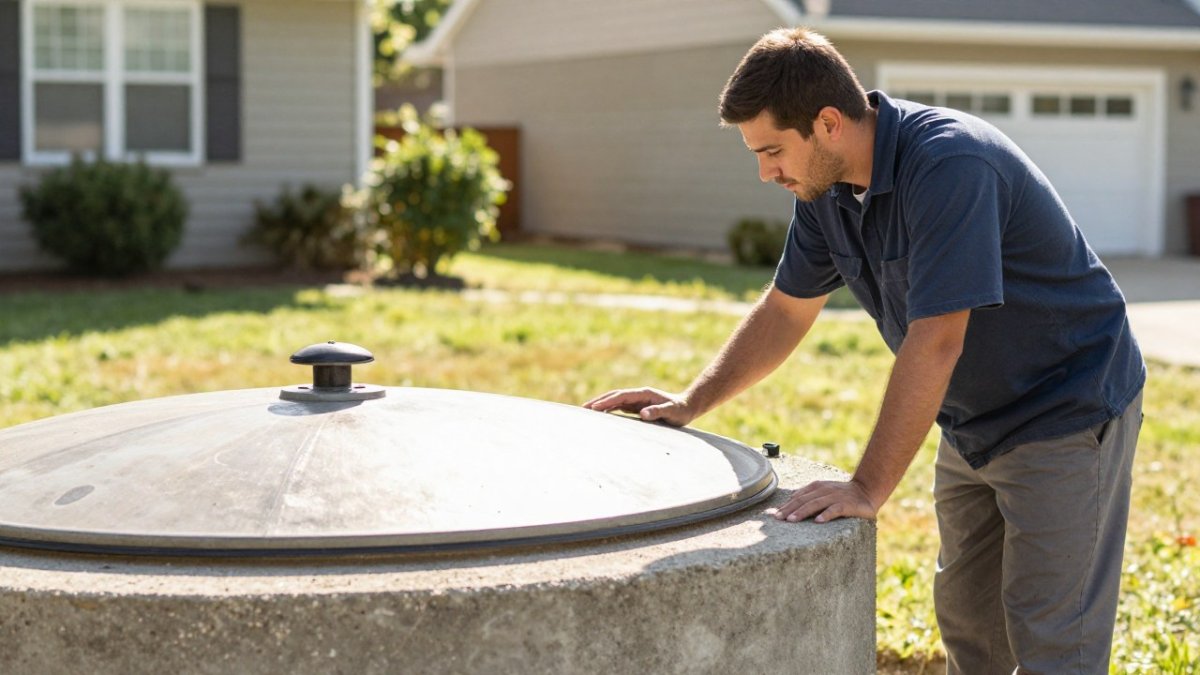
Follow these steps to build your schedule:
- Find your tank size, usually printed on the system's permit or installation records
- Estimate your household's daily water use
- Check your last pumping date in your records
- Ask a septic professional to measure the sludge and scum layers
- Set a reminder for the next pumping based on those results
Watch out: waiting too long between pumpings can lead to solids overflowing into the drainfield, which can be costly to repair.
How Household Size and Tank Capacity Change the Schedule
A larger family fills the tank faster, so a small tank in a busy home may need pumping more often than the three-to-five-year guideline, while a large tank with two people can often go longer.
- Smaller tank, larger household: pump more often
- Larger tank, smaller household: pumping intervals may be longer
- Heavy garbage disposal use: plan for more frequent pumping
Use tank size and household count together to set a realistic interval.
Daily Habits That Protect Your Drainfield
The drainfield is the most vulnerable part of your septic system, and small daily habits keep it working.
Spread out water use.
Fix leaks right away.
Keep fats, oils, and grease out of the sink.
Limit the garbage disposal.
Do not park vehicles or build structures over the drainfield; the weight compacts soil and can crush pipes underneath.
Septic System Warning Signs and What to Do About Them
Warning signs matter most when you know what each one means. Compare a fuller list of failing-septic symptoms against your own system. Use this symptom-to-action guide to decide what to do in the first hour, the first day, and when to call a licensed professional. Read a deeper guide to spotting aging septic failure for early signs to watch.
Slow drains throughout the house
When every drain drains slowly at once, the problem is usually downstream, a full tank, clogged main line, or saturated drainfield. A single slow drain is often just a local clog clearable with a plunger or snake.
- First hour: Stop running water. Do not use chemical drain cleaners, which can kill the bacteria your system depends on and damage pipes.
- First day: Check whether the slowdown is house-wide or limited to one fixture. Look for gurgling sounds when water drains.
- Call a professional if: The slowdown is house-wide, repeats within a few weeks, or is paired with odors.
Gurgling sounds in the plumbing
Gurgling means air is being pulled through a trap because water is not moving freely. It often appears just before a backup and is one of the earliest signals that the tank or inlet baffle is restricted.
- First hour: Note which fixtures gurgle and when. Reduce water use until you know more.
- First day: Schedule an inspection. Gurgling rarely resolves on its own.
- Call a professional if: Gurgling is paired with slow drains or odors.
Sewage odors in the yard or inside the home
Odors in the yard over the tank or drainfield can indicate a full tank, cracked lid, or venting problem. Odors inside usually point to a dry trap, blocked vent stack, or backup in progress.
- First hour: Open windows, run water in unused fixtures to refill traps, and avoid flushing anything.
- First day: Check that floor drains and rarely used sinks have water in the trap. Inspect the vent stack on the roof for nests or debris.
- Call a professional if: The odor is strong, persistent, or accompanied by slow drains or wet spots.
Wet, soggy spots over the drainfield
Standing water or spongy ground over the drainfield, especially in dry weather, suggests the soil is no longer absorbing effluent. This is one of the most serious signs because it can lead to surface discharge and public-health concerns.
- First hour: Stop all nonessential water use, including laundry and dishwashing. Keep people and pets off the area.
- First day: Check for recent heavy rain, a leaking irrigation line, or a downspout routed toward the field. Divert surface water away.
- Call a professional if: The wet spot persists in dry weather, smells of sewage, or is paired with indoor backups.
Unusually lush, green grass over the drainfield
A strip of bright green grass over the drainfield can signal nutrient-rich effluent reaching the surface. It is easy to mistake for good lawn health, which is why it is often missed.
- First hour: No action needed beyond noting the pattern.
- First day: Compare the green strip to the rest of the lawn. A distinct, linear band that follows the drainfield lines is the pattern to watch.
- Call a professional if: The green strip is new, widening, or paired with odors or wet spots.
Sewage backing up into tubs, sinks, or toilets
A backup into the lowest fixtures is the clearest sign of a serious blockage or saturated system, the one symptom that warrants immediate action.
- First hour: Stop all water use. Do not flush. Do not attempt to pump the tank yourself.
- First day: Call a licensed septic professional. Keep children and pets away from affected fixtures.
- Call a professional immediately if: Raw sewage is entering the home. This is a health hazard and should be treated as an emergency.
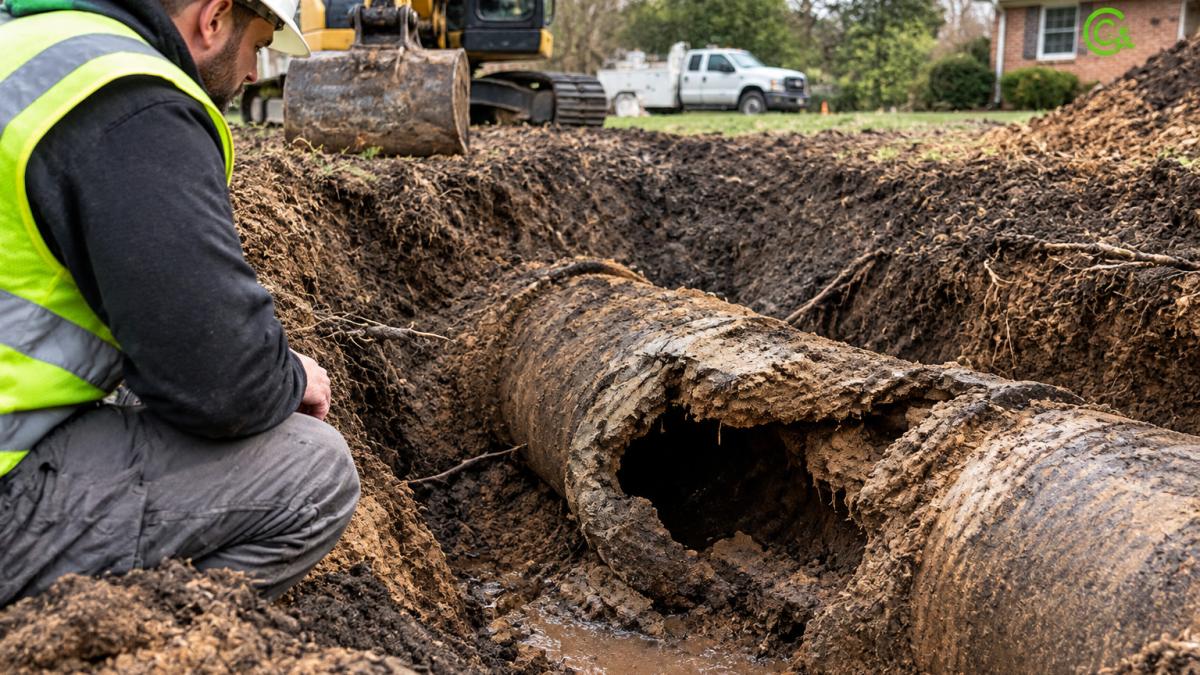
Watch out: Never enter a septic tank or excavation to inspect a problem yourself. Tanks can contain toxic gases, and confined-space entry is a leading cause of fatal septic accidents.
When to call a professional versus when to wait
A useful rule of thumb: call a professional for any symptom that is house-wide, repeats, or involves odors, wet spots, or backups.
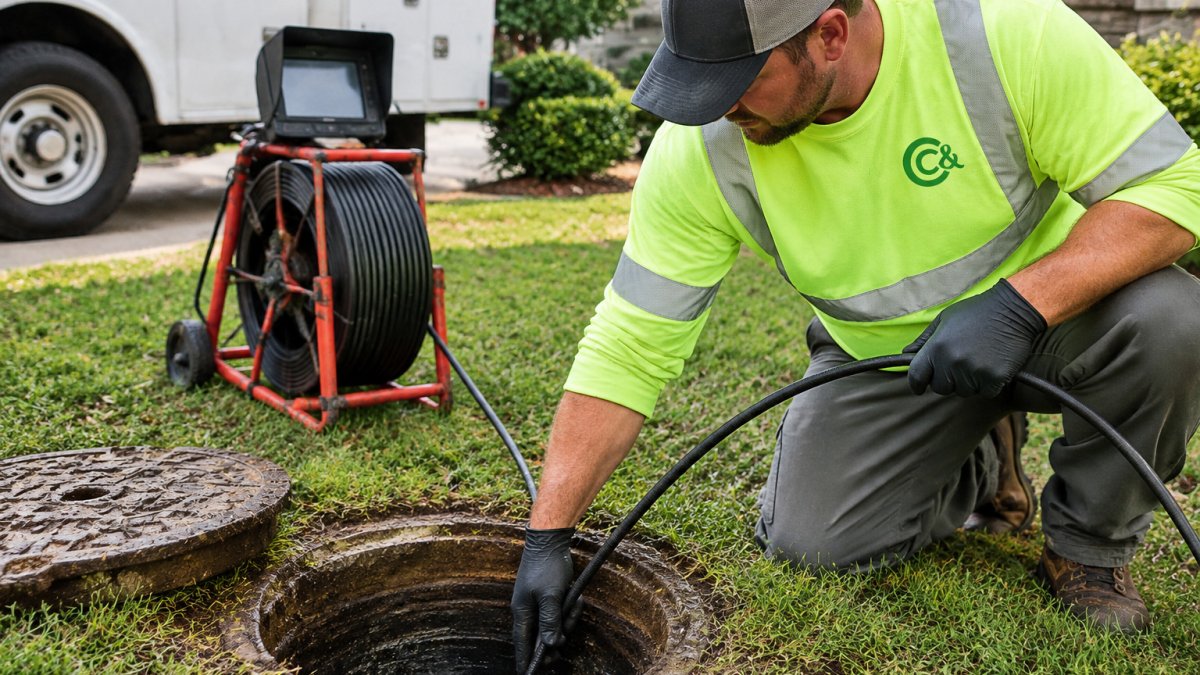
Camera inspections can help show the inside of pipes and tanks, giving a clearer picture of the cause so repairs target the real issue. Explore septic services and the help available if you suspect a problem.
The table below summarises the first-hour and first-day responses to each warning sign covered in this section.
| Warning sign | First action | When to call a professional |
|---|---|---|
| Slow drains throughout the house | Stop running water; avoid chemical drain cleaners | House-wide, repeats within weeks, or paired with odors |
| Gurgling sounds in plumbing | Note which fixtures gurgle; reduce water use | Paired with slow drains or odors |
| Sewage odors in yard or home | Open windows; run water in unused fixtures | Strong, persistent, or with wet spots |
| Wet, soggy spots over drainfield | Stop nonessential water use; keep people and pets off | Persists in dry weather or smells of sewage |
| Unusually lush green grass over drainfield | Compare the green strip to the rest of the lawn | Strip is new, widening, or paired with odors |
| Sewage backing up into tubs or toilets | Stop all water use and do not flush | Call a licensed septic professional immediately |
Seasonal Septic Maintenance and Maintenance During Repairs
Your septic system faces different stresses through the year. Plan care around the seasons, and know what to expect when a service visit or repair happens.
Spring: heavy rain and flooding
Spring rain saturates soil, which reduces the drainfield's ability to absorb effluent. Standing water over the field in spring is common and not always a sign of failure, but it should be watched.
- Divert roof drains, sump pump discharge, and surface runoff away from the tank and drainfield.
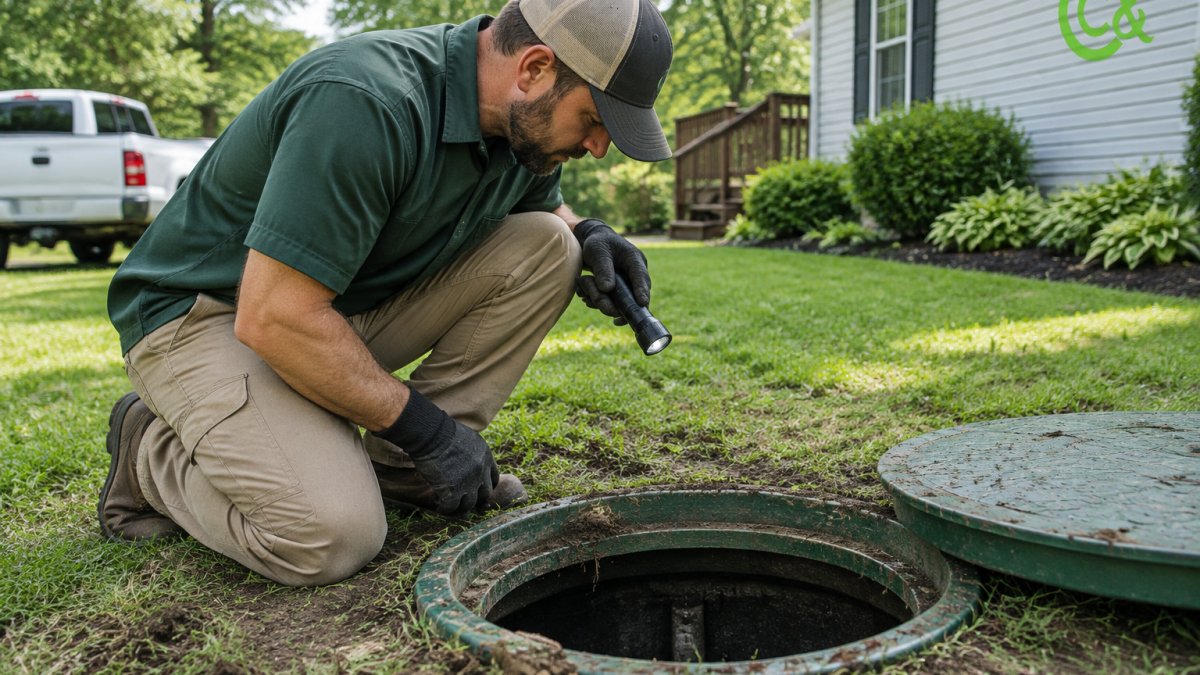
- Check that the tank lid is secure and not submerged. A submerged lid can let surface water into the tank.
- After a flood, have the system inspected before resuming normal water use. Floodwater can carry debris and silt into the tank and lines.
Watch out: If floodwater has reached the tank lid, treat the system as potentially compromised and call a professional before using water heavily.
Summer: drought and irrigation
Dry weather can tempt homeowners to irrigate the drainfield, but extra water on the field is the opposite of what it needs. Drought also concentrates waste in the tank, which can speed sludge accumulation.
- Do not irrigate or sprinkler the drainfield area.
- Keep lawn equipment and vehicles off the field, since dry soil compacts more easily.
- Watch for new wet spots or odors, which can be more noticeable in dry weather.
Fall: leaves, debris, and access
Falling leaves and debris can bury the tank lid and make inspections harder. Fall is also a good time to schedule routine service before winter.
- Clear leaves and debris from the area over the tank so the lid remains accessible.
- Note the tank and drainfield locations on your site map if you have added landscaping.
- Schedule any needed pumping or inspection before the ground freezes.
Winter: freezing weather and snow
Freezing temperatures can crack lids, freeze lines, and make access difficult. Snow cover actually insulates the tank, so avoid compacting or removing it over the tank and field.
- Keep vehicles and heavy equipment off the drainfield even when the ground is frozen.
- Do not pile snow over the tank lid or access points; keep them clear enough to find but insulated.
- Watch for slow drains in winter, which can indicate a frozen line rather than a full tank.
What to expect during a pumping or repair visit
Knowing what a service visit involves helps you prepare and helps the contractor work efficiently.
- Before the visit: Locate your tank and drainfield records, clear access to the lid, and move vehicles away from the work area.
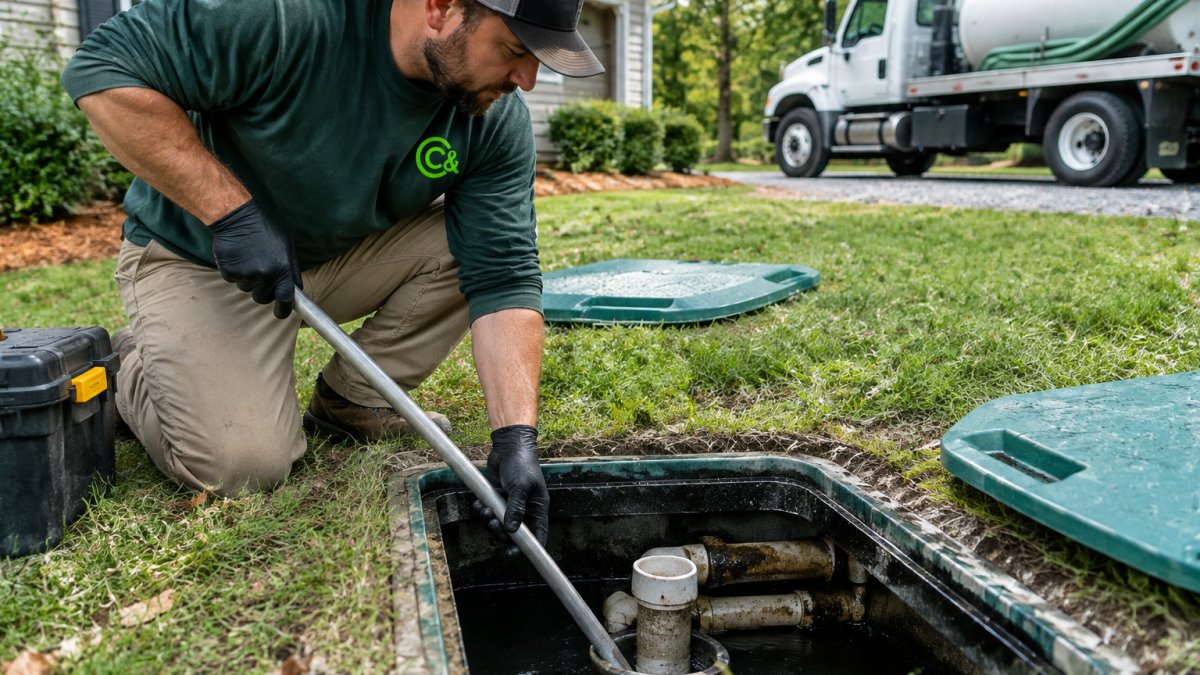
- During the visit: The contractor will pump the tank, measure sludge and scum levels, and inspect the baffles and outlet. Ask them to note the condition of the tank and any concerns.
- After the visit: Ask for a written record of the pumping date, tank condition, and any recommended follow-up. Keep children and pets away from open tanks and excavated areas until the site is restored.
Watch out: Never enter a tank or excavation yourself, and do not allow anyone to work in a tank without proper confined-space equipment and training. Tank gases can be fatal.
After a repair
After any repair, ask the contractor what was replaced, what to watch for, and whether the pumping schedule should change. Document the work in your maintenance records so the next inspection has a clear history. If the repair involved the drainfield, keep heavy traffic off the area until the contractor confirms the soil has settled.
Keeping Septic System Maintenance Records for Your Next Inspection
Good records make every future inspection faster and more useful. Keep a folder or digital file with these items:
- The date and results of each inspection
- Pumping dates and the tank condition noted during pumping
- Repair invoices and the work completed
These records help a professional understand your system's history and help you plan the next pumping and spot patterns, such as a tank that fills faster than expected.
Keeping this information organized gives you confidence whenever you call for service. Ready to put a maintenance plan in place? Contact C & C Environmental Services today to schedule an inspection.
Frequently Asked Questions
How often should a residential septic tank be pumped?
Most households should have a septic tank pumped every three to five years, though the right interval depends on tank capacity, household size, and how much wastewater the home produces. A larger household on a smaller tank may need pumping more often than a smaller household with a larger tank. Have a licensed septic professional measure the scum and sludge layers during inspection, since that measurement is the most reliable guide to when pumping is due.
What should you avoid putting down a septic system?
Avoid flushing wipes labeled as flushable, feminine products, diapers, paper towels, cigarette butts, and cat litter, since these do not break down and can clog the tank or outlet. Pour fats, oils, and grease into a sealed container instead of the sink, and limit coffee grounds and food scraps, which add solids to the tank. Harsh chemicals, solvents, paint, and excessive bleach or antibacterial products can also disrupt the bacteria that break down waste, so use them sparingly.
What are the signs that a septic system needs maintenance?
Common warning signs include slow drains throughout the house, gurgling plumbing, sewage odors near the tank or drainfield, sewage backing up into toilets or tubs, and wet spots or unusually lush grass over the drainfield. Any of these symptoms can point to a full tank, a clogged outlet, or a failing drainfield. If you notice sewage backup or standing wastewater, reduce water use immediately and contact a septic professional, because prolonged overflow can damage the system and create a health hazard.
How can I keep septic system maintenance records?
Keep a simple file or spreadsheet that logs each inspection date, pumping date, the tank's measured sludge and scum levels, any repairs, and the name of the service provider. Save invoices and inspection reports alongside the log, and note the location of the tank and drainfield on a sketch of your property. These records help you set future pumping intervals, show buyers or lenders the system's history, and give a technician the background they need when troubleshooting.