 How-to
Why Do Sewer Lines Collapse Underground?
Quick Summary
Sewer lines collapse underground when the pipe cracks, breaks, or sinks out of place, usually due to tree root intrusion, aging pipe material, soil movement, heavy loads, or poor original installation. These forces work slowly, so small cracks can grow into full collapses before homeowners notice problems.
- Tree roots enter joints and cracks, thicken, and catch debris until the pipe cracks.
- Clay, cast iron, and older plastic pipe lose wall strength over decades.
- Several slow drains at once often point to the main lateral line or a root mass.
- A sunken strip in the yard over the line suggests soil movement, a sag, or a break.
- A camera inspection shows the actual pipe condition so repairs target the real cause.
Table of Contents
- How a Sewer Line Works and Why Underground Pipes Fail
- Numbered Causes Behind Sewer Line Collapse
- Signs of a Collapsed Sewer Line to Watch For
- How Sewer Camera Inspection Confirms the Damage
- Sewer Line Repair Options and What Each Involves
- Understanding Sewer Line Repair Cost Factors
- Scheduling a Professional Inspection Before Collapse Spreads
- Frequently Asked Questions
How a Sewer Line Works and Why Underground Pipes Fail
Last Updated: November 15, 2026
Sewer lines collapse underground when the pipe that carries wastewater from your home to the main line cracks, breaks, or sinks out of place.
A sewer line is a gravity-fed pipe. Waste leaves your home through the drain system, travels downhill through the lateral line, and joins the municipal main or your septic tank.
Underground pipes fail because they face constant pressure they cannot see. Soil moves with rain and temperature changes. Roots search for water. Older pipes lose strength.
Numbered Causes Behind Sewer Line Collapse
Most sewer line collapses trace back to a handful of causes. The list below covers all five, with the mechanism behind each one so you can match what you are seeing to what is likely happening underground.
- Tree root intrusion, roots enter through joints and hairline cracks, then thicken and catch debris until the pipe cracks from the inside.
- Pipe age and material deterioration, clay, cast iron, and early plastic pipe lose wall strength over decades and fail under loads they once handled.
- Soil movement and ground pressure, wetting and drying, settling fill, and freeze-thaw cycles shift the pipe bed so the pipe sags or offsets at the joints.
- Heavy loads, vehicles, equipment, or stockpiled material over a shallow line crush the pipe or crack it at the crown.
- Poor original installation, weak bedding, incorrect slope, or backfill that was not compacted leaves the pipe unsupported from day one.
Tree Root Intrusion
Tree roots are one of the most common reasons sewer lines fail. Roots grow toward moisture, and a sewer pipe leaks small amounts of water through joints and cracks.
Once inside, the root thickens and catches debris. Grease, paper, and other waste build up around it. The pipe narrows, flow slows, and eventually the blockage can crack the pipe wall from the inside.
- Clay tile and older jointed pipe are especially easy for roots to enter.
- Willows, maples, and large shade trees often send roots farther than people expect.
- Root damage often shows up first as slow drains across several fixtures.
Pipe Age and Material Deterioration
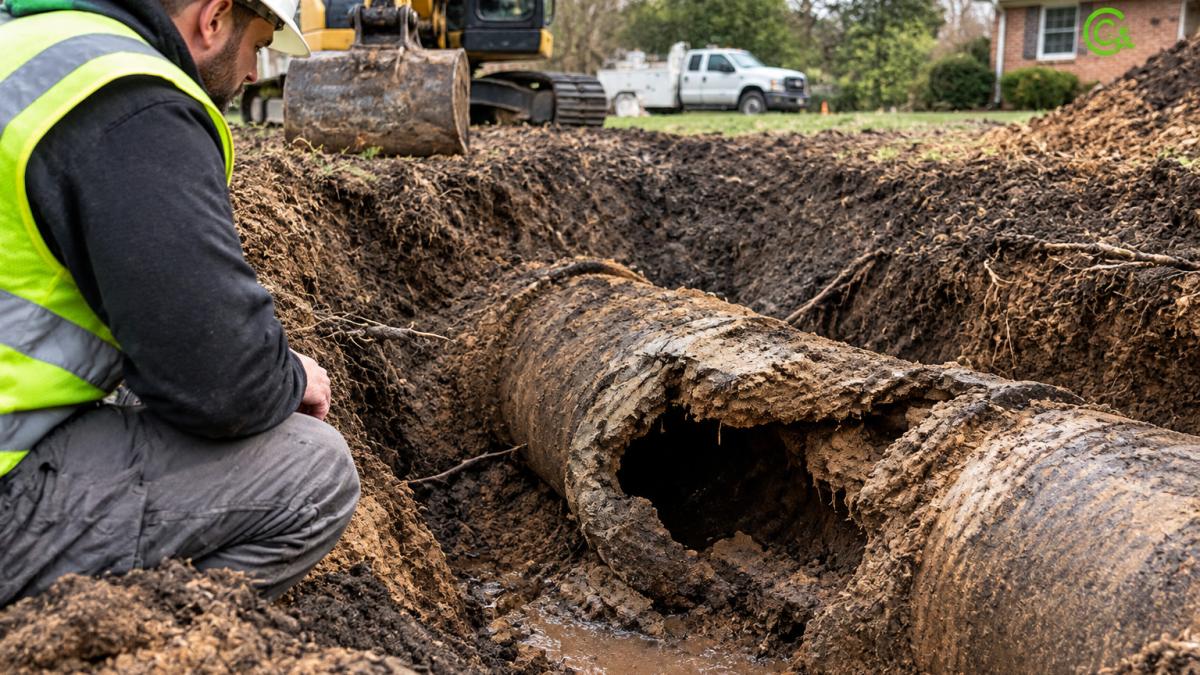
Pipe material matters. Clay pipe can crack under ground movement. Cast iron rusts from the inside out. Some older plastic pipe becomes brittle over decades of heat and cold.
A pipe that has lasted fifty years may look fine from the outside while the wall thins underground. This is why an older home can have a sewer problem even when nothing has changed recently.
- Clay pipe is common in homes built before the 1970s.
- Cast iron can corrode, especially where water pools.
- Age alone does not cause collapse, but it lowers the pipe's ability to handle stress.
Soil Movement, Ground Pressure and Heavy Loads
Soil is never still. Heavy rain can saturate clay soils, and dry spells can shrink them. This movement pushes on the pipe from every side. When the ground under a pipe settles, the pipe can sag and break.
Heavy loads add to the problem. Driving a truck or heavy equipment over a shallow pipe can crush it. Construction work nearby can also disturb the soil bed that supports the line.
- Sagging pipes create low spots where waste collects.
- Frequent wet and dry cycles can speed up soil movement.
- Driveways, patios, and parking areas placed over a sewer line add extra pressure.
Poor Original Installation
Some lines were set up to fail. If the trench bottom was not graded, the bedding was too thin, or the backfill was not compacted, the pipe has been unsupported since the day it went in.
Watch out: a line that backs up repeatedly after being cleared, with no obvious root mass or break, is often a slope or bedding problem from installation rather than a new blockage.
How to Tell Which Cause You Are Dealing With
Symptoms overlap, so use the pattern rather than a single sign to narrow it down.
- One fixture slow, others fine, more likely a local clog than a collapsed main line.
- Several fixtures slow at once, or backups after heavy water use, points toward the main lateral or a root mass.
- Gurgling plus odors but no backup yet, often a partial blockage or a venting issue; worth a camera look.
A camera inspection is what separates a guess from a diagnosis. It shows roots, cracks, offset joints, and sags directly, so the repair targets the actual cause instead of the symptom.
The article traces most collapses to five causes, each with a distinct mechanism.
| Cause | Mechanism | Typical sign |
|---|---|---|
| Tree root intrusion | Roots enter joints and cracks, thicken, and catch debris | Slow drains across several fixtures |
| Pipe age and deterioration | Wall strength is lost over decades | Repeated problems in older homes |
| Soil movement and ground pressure | Wetting, drying, settling, and freeze-thaw shift the pipe bed | Sunken strip in the yard over the line |
| Heavy loads | Vehicles or equipment crush or crack the pipe | Damage under driveways or parking areas |
| Poor original installation | Weak bedding, wrong slope, or uncompacted backfill | Repeated backups after clearing |
Signs of a Collapsed Sewer Line to Watch For
A collapsed sewer line rarely fails all at once. Watch for these warning signs:
- Several drains running slowly at the same time
- Sewage or wastewater backing up into tubs, showers, or floor drains
- Gurgling sounds from toilets or drains
If you see more than one of these signs, call a professional soon. Waste that stays in the ground can contaminate soil and nearby water.
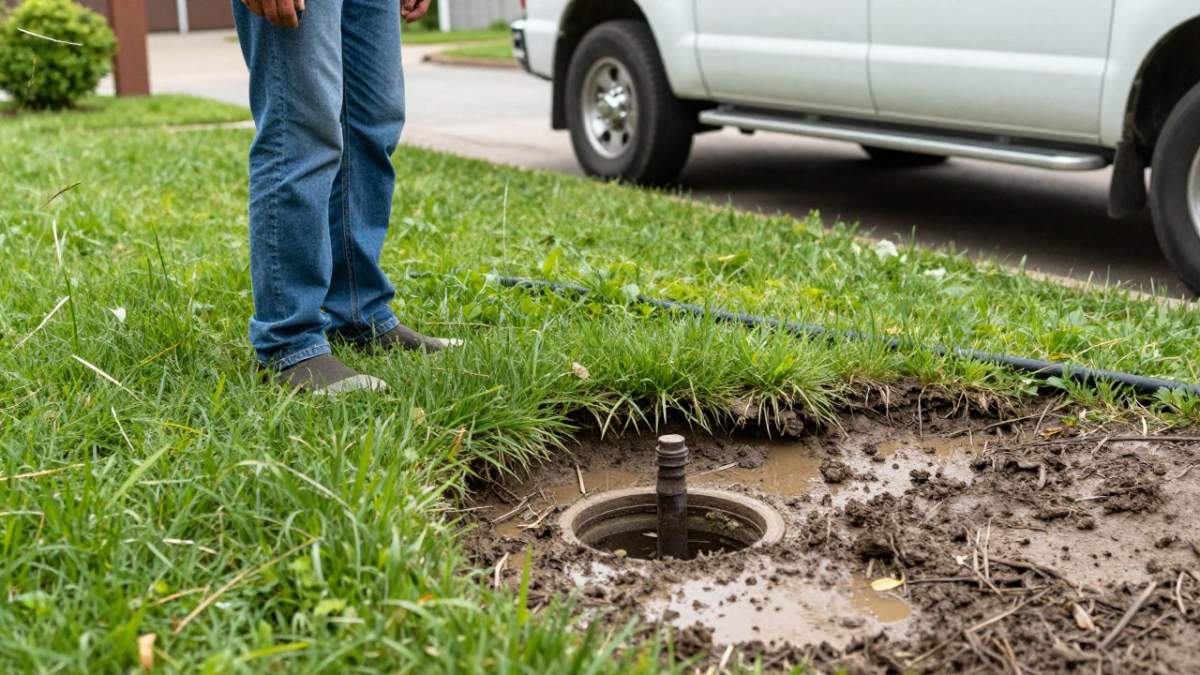
!Homeowner in a backyard inspecting soggy ground and a lush grass strip near a cleanout pipe, with a service truck parked nearby
How Sewer Camera Inspection Confirms the Damage
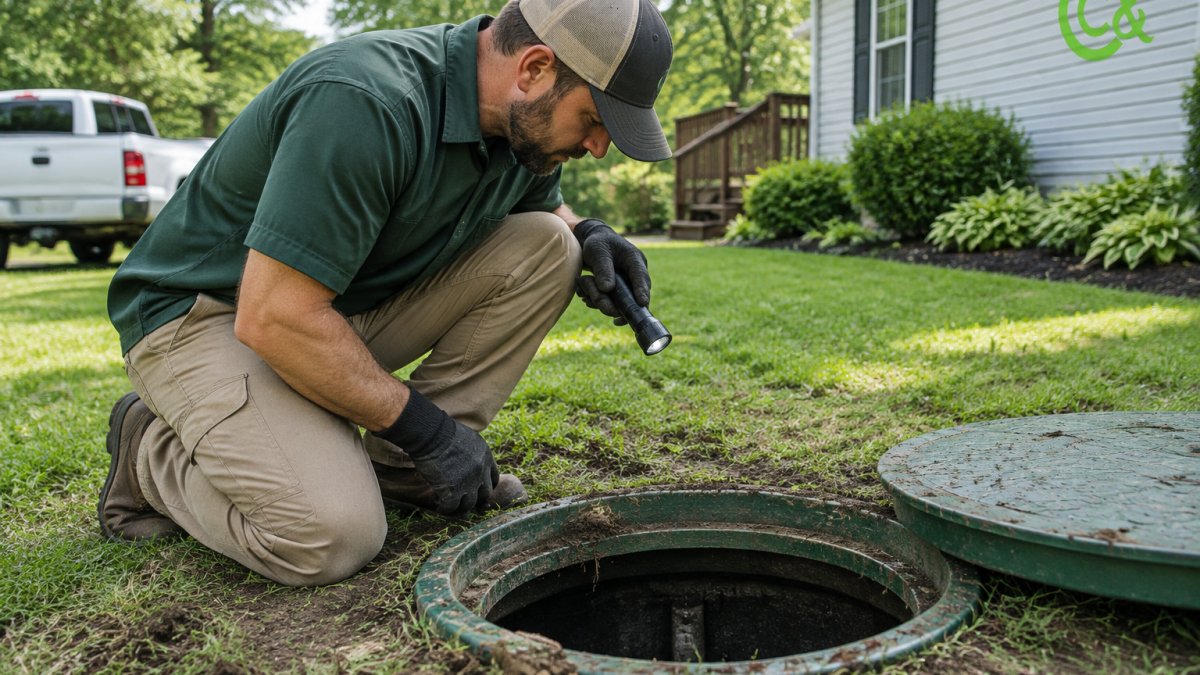
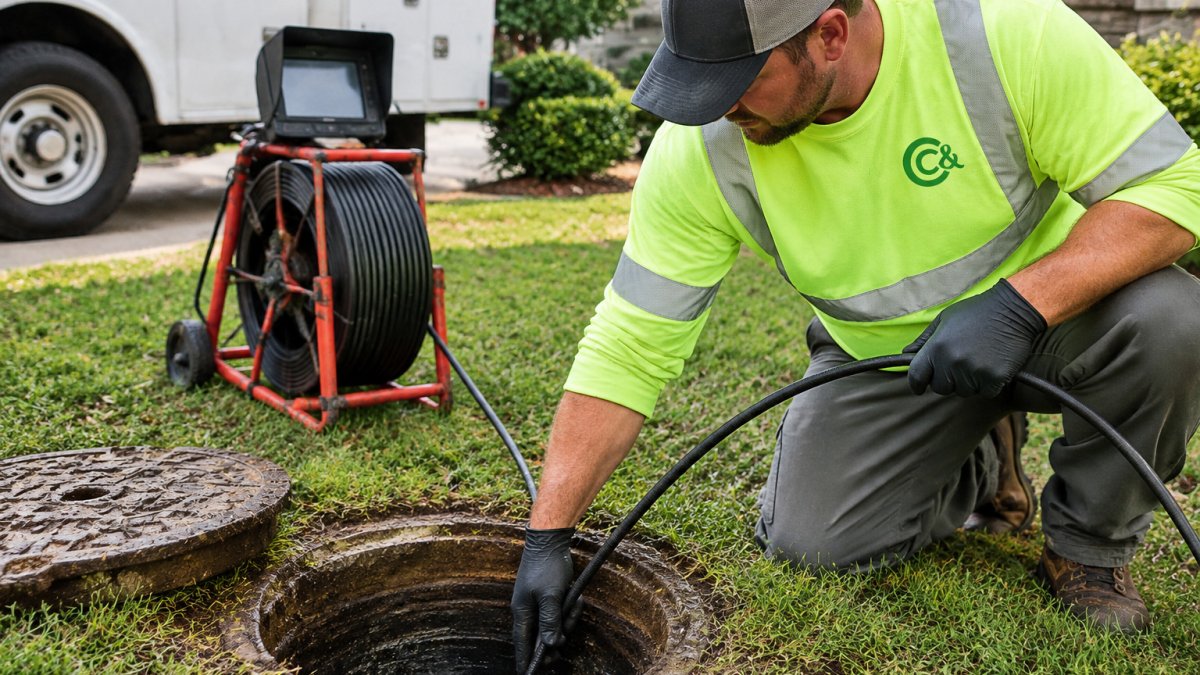
Guessing about a sewer problem costs time and money. A sewer camera inspection shows what is actually happening inside the pipe. A technician feeds a small waterproof camera through a cleanout or drain opening and watches the line on a monitor.
The camera shows cracks, root masses, offset joints, sags, and low spots. Many inspections also record video, so you can see the damage yourself. This gives you a clear picture before any repair decision.
Sewer Line Repair Options and What Each Involves
The right repair depends on how much of the line is damaged and where the damage sits. There are three main approaches, and the camera findings usually point to one of them.
- Spot repair fixes one small, isolated break by replacing that section of the pipe. Best when the camera shows a single crack or offset and the rest of the line is sound.
- Pipe lining inserts a liner into the existing pipe. This avoids a large trench but works best when the pipe is still mostly intact and has no major sag.
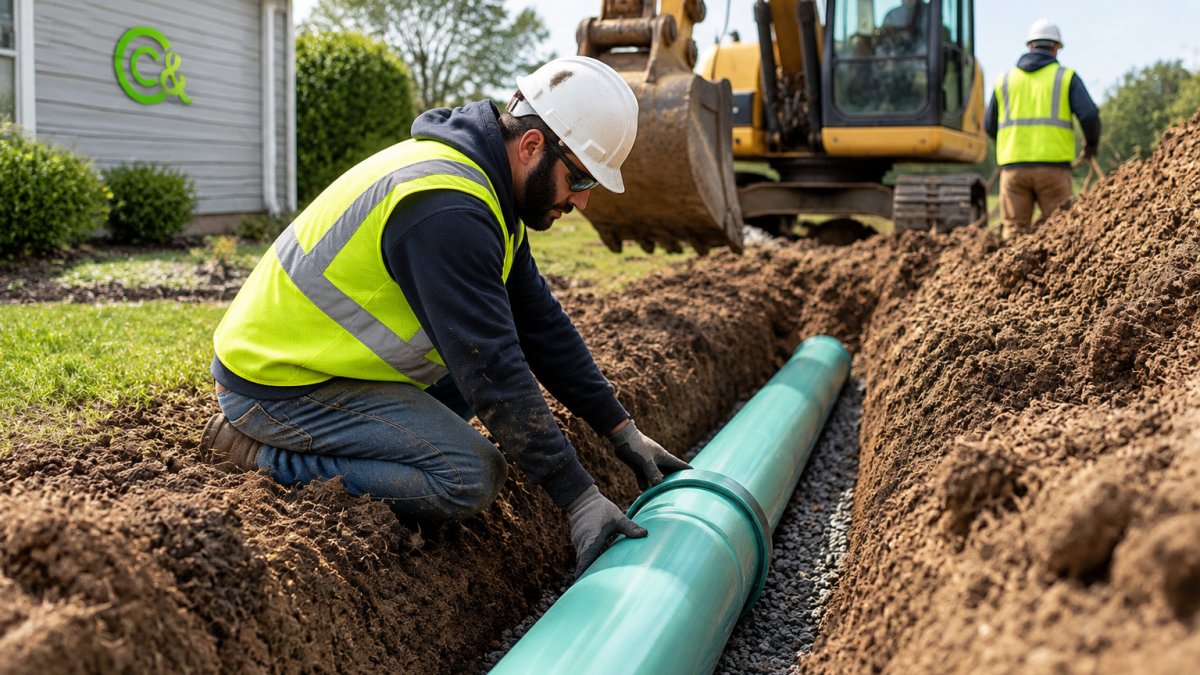
- Full replacement removes the damaged line and installs new pipe. This is the most disruptive option, but it may be the best choice for a line that is failing in many places or has lost its slope.
Each option has trade-offs. Spot repairs are quick but do not fix other weak sections. Lining causes less yard damage but cannot straighten a badly sagging pipe. Replacement lasts longest but costs more and needs more digging.
Matching the Repair to What the Camera Shows
- One crack, offset joint, or root mass in a short run, spot repair is usually enough.
- Cracks and corrosion along a stretch, pipe still round and on slope, lining can restore the wall without a full dig.
- Multiple breaks, a belly, backfall, or crushed section, replacement is the durable answer, because lining will not restore slope.
What to Do While a Line Is Failing
If sewage is backing up or surfacing in the yard, the priority is to stop adding water and limit exposure.
- Stop using fixtures that drain to the affected line, including the washing machine and dishwasher.
- Keep people and pets away from any surfacing wastewater or soggy ground.
- Avoid contact with sewage; wash hands and clothing if exposure occurs.
- Arrange a camera inspection before authorizing any repair.
- Follow local health department guidance if the line serves a septic system or if wastewater reaches a well or surface water.
Watch out: pouring chemical drain cleaners into a line with a suspected collapse can pool caustic liquid in the soil and does not fix the break.
What an Inspection Should Cover
A qualified inspection is more than a quick camera pass. Expect the technician to check the cleanout access, the condition of the tank or municipal connection where visible, baffles and the effluent filter on a septic system, the distribution components, and the drainfield area if the system is on-site. The report should note the location and depth of any defect, the pipe material, and whether the line holds slope.
Repair Versus Replace: How the Decision Usually Goes
Repair tends to win when the defect is localized, the pipe is still round, and the slope is intact. Replacement tends to win when defects are spread out, the pipe has lost slope, or the same section has failed more than once. A middle path, lining a sound but cracked run, can defer a dig, but it is not a fix for a sagging or crushed line.
Understanding Sewer Line Repair Cost Factors
Repair costs depend on the condition of the pipe, the length of the damaged section, the depth of the line, and how much access work is needed. Other factors include the pipe material, the need to cut through concrete or landscaping, and whether permits are required. For current pricing, contact C & C Environmental Services for a quote based on your property.
Scheduling a Professional Inspection Before Collapse Spreads
Once a sewer line starts to fail, the damage tends to spread. A small crack becomes a bigger break, and a slow drain becomes a full backup. Scheduling an inspection early gives you more repair options and lowers the chance of emergency work.
Call a professional when you notice any of the warning signs above, or when trees grow near the sewer line. When a camera inspection confirms that a damaged line cannot be repaired, professional sewer line replacement may be the next step in restoring reliable drainage.
Ready to find out what is happening under your yard? Contact C & C Environmental Services today for a camera inspection and a clear, upfront estimate.
Frequently Asked Questions
What causes a sewer line to collapse underground?
Sewer lines usually collapse because of a combination of factors rather than one event. Tree roots seek moisture and can crack joints and penetrate pipe walls. Aging clay, cast iron and early plastic pipes weaken over decades. Soil shifting, freeze-thaw cycles, heavy vehicle traffic and poor bedding under the pipe can all add stress until the structure fails. A camera inspection is the most reliable way to identify which of these is responsible in a specific line.
Can tree roots cause a sewer pipe to collapse?
Yes. Roots grow toward the moisture and nutrients that leak from sewer joints and cracks. Once a root enters, it can expand, trap debris and gradually crack or displace the pipe. Over time this can cause sections to sag, separate or collapse entirely. Trees planted close to older sewer lines carry the highest risk, so a camera inspection is a practical first step if you suspect root involvement.
How can you tell if a sewer line is broken or collapsed?
Repeated slow drains across several fixtures, gurgling sounds, sewage odors, backups into lower-level drains and unusually green or soggy ground along the line route are common indicators. Because these symptoms overlap with simple clogs, a sewer camera inspection is the most dependable way to confirm whether the pipe is cracked, offset or collapsed. If several symptoms persist after clearing a blockage, schedule a professional evaluation.
How much does it cost to repair a collapsed sewer line?
Pricing depends on the line's length and depth, the pipe material, the location of the damage, site access and whether excavation or trenchless methods are used. C & C Environmental Services provides upfront, honest estimates with no surprise pricing after inspection. Contact C & C Environmental Services directly or visit its website to request a quote for your specific property.