 ultimate-guide
Utility Conflict Resolution for Construction Projects
Last Updated: November 8, 2026
Quick Summary
Utility conflict resolution is the process of finding, verifying and resolving places where buried or overhead utility lines clash with a construction project's planned design. The most effective teams treat these conflicts as schedule risks from the first design meeting, gathering records early and verifying locations in the field before design is final.
- Pull existing utility plans and as-built drawings before the design locks, and log the date each record arrives.
- Overlay every known utility on the proposed alignment, both horizontal and vertical, and flag any clash or clearance issue.
- Confirm actual utility locations in the field, since records are a starting point and field results control the design decision.
- Build utility relocation lead times into the critical path, because owner crews, permits and materials often run longer than expected.
- Assign each conflict a named owner and due date, and update the as-built drawings when a conflict is resolved.
Table of Contents
- What Utility Conflicts Cost a Construction Project
- Gathering Utility Records and As-Built Drawings Before Design Is Final
- Utility Conflict Investigation Steps From Identification to Verification
- Building a Utility Conflict Matrix to Rank Risk and Priority
- Roles, Responsibilities, and Decision Rights Among Owners, Designers and Contractors
- Utility Relocation Coordination: Protect in Place, Adjust or Relocate
- Scheduling Your Next Utility Coordination Meeting and Closing Out Conflicts
- Frequently Asked Questions
Utility conflict resolution for construction is the process of finding, verifying and resolving the places where buried or overhead utility lines clash with a project's planned design. C & C Environmental Services has spent more than 20 years on utility and site work across North Carolina, and a single unmarked line can stall a job for weeks. Most of those delays are avoidable. The teams that avoid them treat utility conflicts as a schedule risk to manage from the first design meeting, not a surprise to fix once the excavator is already digging. This guide walks through that workflow step by step, from early records research to field verification and the coordination meetings that close each conflict out.
What Utility Conflicts Cost a Construction Project
A utility conflict occurs when an existing pipe, conduit or cable sits where the project needs to build something else. The cost of that conflict depends on when it is found. Caught on paper during design, it costs a redesign. Caught in the field, it can mean a utility strike, an emergency relocation and idle crews. Many owners find that schedule delay costs more than the relocation itself.
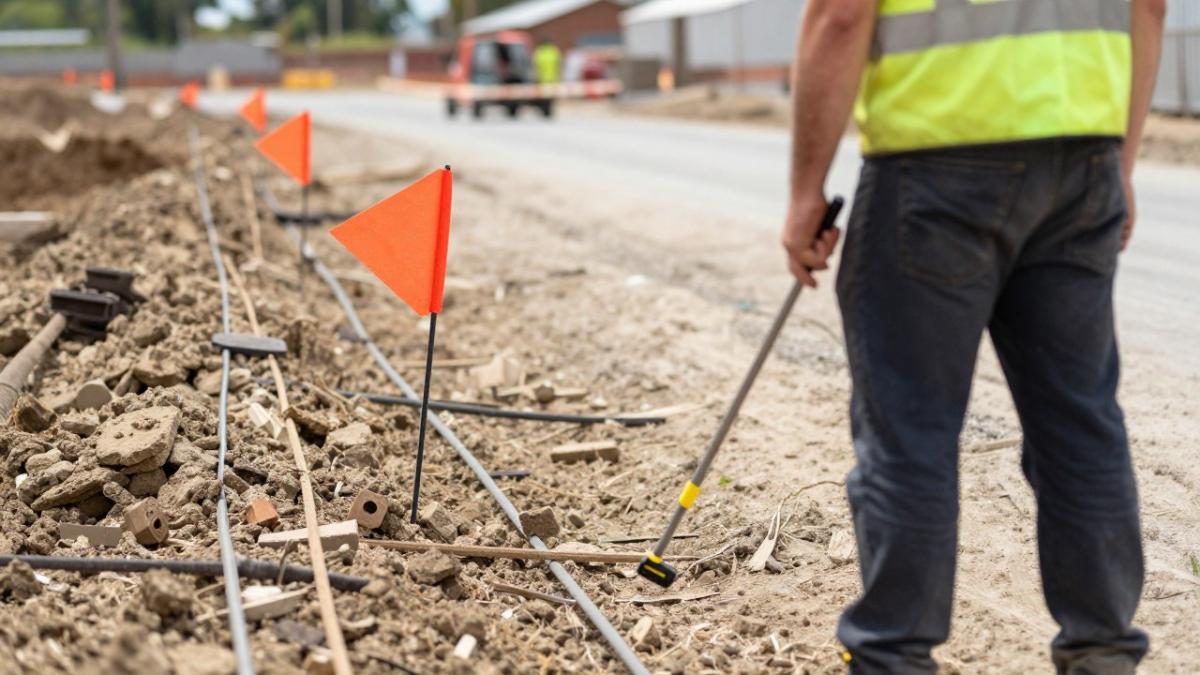
A common mistake is treating the utility owner's relocation schedule as a fixed date. Relocations depend on the owner's own crews, permits and materials, so they often run longer than the construction schedule expects. Build that lead time into your critical path from the start.
Gathering Utility Records and As-Built Drawings Before Design Is Final
Before the design locks, pull every utility record you can find. These include existing utility plans, as-built drawings from previous projects, and records held by each utility owner in the corridor. As-built drawings show where a line was actually installed, which often differs from the original design. Older records may be incomplete, so treat them as a starting point rather than proof.
Request records early and in writing, and log the date each one arrives. Missing or outdated records are one of the most common reasons conflicts surface late in a project.
Utility Conflict Investigation Steps From Identification to Verification
Investigation moves through a fixed sequence. Skipping a step is how conflicts reach the field unnoticed.
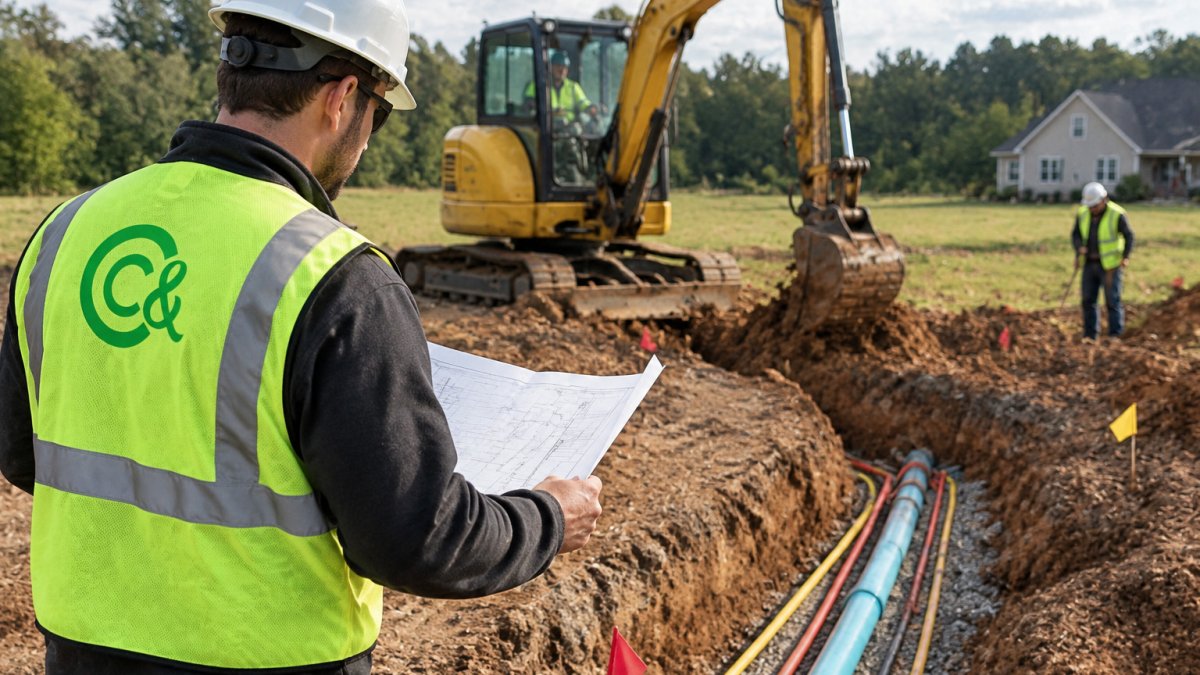
- Overlay the records on the proposed design. Plot every known utility over the planned alignment, both horizontal and vertical. Flag any point where a utility and a design element occupy the same space or come within the required clearance.
- Rank each potential conflict. Note the utility type, its depth, its owner and whether it can be protected in place.
- Schedule field verification. Records alone are not enough. Confirm the actual location of each flagged utility in the field before the design is finalized.
- Assign an owner to each conflict. Every flagged item needs a named person responsible for resolving it and a date by which that resolution is due.
- Document the outcome. Record the verified location, the chosen resolution and the sign-off from the utility owner.
Field Verification and Subsurface Utility Locating
Where records and the field disagree, the field result controls the design decision.
That call notifies the utility owners so they can mark their lines, and it should happen before any verification or excavation begins.
Documenting Each Conflict
Keep one log entry per conflict. Record the location, the utilities involved, the verification method and date, the proposed resolution, the responsible party and the closure date. A clear log lets anyone on the team see the status of every conflict at a glance and prevents the same problem from being rediscovered later.
The investigation follows a fixed sequence, and each step builds on the one before it.
| Step | What to do | Timing |
|---|---|---|
| Overlay records on design | Plot every known utility over the proposed alignment, horizontal and vertical | Before design is final |
| Rank each conflict | Note utility type, depth, owner and whether it can be protected in place | After overlay |
| Verify in the field | Confirm actual utility locations before design is finalized | Before design is finalized |
| Assign an owner | Name a responsible person and a resolution due date for each item | Once flagged |
| Document the outcome | Record verified location, chosen resolution and utility owner sign-off | At closure |
Building a Utility Conflict Matrix to Rank Risk and Priority
A utility conflict matrix is a working spreadsheet, not a one-time ranking. Its job is to tell the team where to spend investigation money first and which conflicts can safely wait. A single likelihood-times-impact score is a start, but it hides the differences that matter most in the field: a low-probability strike on a high-pressure gas main is not the same risk as a likely clash with an abandoned irrigation line.
- Strike risk. Score how likely the utility is to be hit during excavation if the conflict is not resolved. Factors include depth of cover, whether the line is marked in the field, the accuracy of the records, and the type of utility. A shallow, unmapped electric duct under a proposed footing scores high; a deep, well-recorded water main scores low.
- Schedule exposure. Score the days the conflict could add to the critical path if it forces a redesign or relocation. A relocation that depends on a utility owner's crew availability and a permit can add weeks even when the physical move is small. Score the lead time, not the pipe diameter.
- Uncertainty. Score how confident the team is in the records and the field verification. A conflict flagged only from an old as-built with no field locate is more uncertain than one confirmed by surveyed locating. High uncertainty means more investigation is needed before a resolution can be chosen, so it belongs near the top of the list.
- Consequence. Score what happens if the utility fails or the conflict is missed. Count safety exposure to crews and the public, service loss to critical customers such as hospitals, fire stations, and data centers, and environmental or regulatory consequences. A small line serving a hospital can outrank a larger line serving a warehouse.
Multiply the four scores to get a priority index, then sort the matrix from highest to lowest. In practice, most teams find that a handful of conflicts carry most of the risk, and the matrix makes that visible before the schedule is set. Review the matrix at every coordination meeting and rescore any conflict whose uncertainty drops after field verification.
Watch out: a matrix that is scored once and never updated becomes a false comfort. Rescore after each locate, each utility owner response, and each design change, because the ranking is only as good as the information behind it. As new information changes the risk ranking, GeoSearches can help keep utility designations grounded in current field evidence.
Keep the matrix tied to the conflict log so each row links to the verification record, the responsible party, and the closure date. That link is what turns a ranking exercise into a decision tool the whole project can audit.
Roles, Responsibilities, and Decision Rights Among Owners, Designers and Contractors
Conflicts stall when no one knows who decides. Assign decision rights before the first conflict appears.
Put these roles in writing in the project plan. Our page on who is responsible for water and sewer line repairs in North Carolina explains how ownership is split in the state. When the utility owner, the designer and the contractor each know what they are accountable for, decisions move faster and disputes over responsibility shrink.
Utility Relocation Coordination: Protect in Place, Adjust or Relocate
Once a conflict is verified, the team chooses one of three paths. Protecting the utility in place keeps it where it is and builds the project around it, which is often the fastest option when the line can be safely supported. Adjusting the utility moves part of it locally to clear the work. Full relocation moves it out of the corridor entirely and usually carries the longest lead time.
Scheduling Your Next Utility Coordination Meeting and Closing Out Conflicts
A utility coordination meeting earns its place on the calendar only if it produces decisions. Set the cadence by phase: every two weeks during design, weekly during construction, and an ad hoc session within 48 hours of any newly discovered conflict in the field.
A workable agenda runs in this order:
- New conflicts. Review anything added to the log since the last meeting, confirm the verification status, and assign an owner and a due date before the meeting ends.
- Open conflicts past due. Walk each one, record the reason for the slip, and reset the date only with the responsible party's agreement.
- Decisions needed. List the items that require the owner, the designer, or the utility owner to choose among alternatives, and record the decision in the meeting notes the same day.
- Upcoming work. Confirm which conflicts must be closed before the next excavation or pour, so the field crew is not waiting on a decision.
- Log and matrix review. Confirm the conflict log and the risk matrix match, and rescore any conflict whose uncertainty changed.
Keep a decision log separate from the conflict log. The conflict log tracks the physical problem; the decision log tracks who chose what, when, and on what basis. When a dispute arises later, the decision log is the record that settles it.
Escalation needs a named path, not a general instruction to 'raise it.' In most projects the path runs from the contractor's superintendent to the owner's project manager to the utility owner's coordinator, with a defined response window at each step.
Construction-phase change management is where most closeout failures happen. When a conflict is discovered after work starts, the team needs a short, repeatable sequence: stop work in the affected area, verify the utility in the field, notify the utility owner, document the condition with photos and survey data, choose a resolution, and record the cost and schedule impact before work resumes.
That discipline keeps the log accurate for project closeout and gives the next project a better set of records to start from.
Watch out: a conflict marked 'resolved' in the field but never reflected in the as-builts will be rediscovered by the next team as a new conflict, often during excavation. The as-built update is part of closure, not an afterthought.
Frequently Asked Questions
How do you resolve utility conflicts on a construction project?
Resolution generally starts with confirming the conflict using as-built records and field verification, then documenting its location, depth and clearance against the proposed alignment. Options typically include protecting the utility in place, adjusting the design, or relocating the utility, each weighed for cost, schedule impact and utility owner approval.
How can utility conflicts be identified before construction begins?
Early identification generally comes from collecting utility records from owners in the project corridor, reviewing as-built drawings, and overlaying those records on the design plans. Field locating can then confirm where lines actually sit, since records are often incomplete or outdated. Flagging conflicts during design review is far cheaper than discovering them during excavation, when redesigns and strikes cause delays.
What information is needed to investigate a utility conflict?
A complete investigation needs the utility owner's records or as-built drawings, the proposed horizontal and vertical alignment, existing and proposed elevations, and field-verified locations with depth readings. Contact information for the utility owner and a record of prior coordination are also needed so the investigation can move toward a decision without repeating work.
Who is responsible for coordinating utilities during construction?
Responsibility is usually shared. The project owner or prime contractor typically leads utility coordination, while the design engineer addresses conflicts in the plans and each utility owner decides how its facilities are protected, adjusted or relocated. Written decision rights prevent gaps when a conflict surfaces in the field.