 ultimate-guide
Commercial Water Infrastructure Maintenance Plan Guide
Last Updated: November 1, 2026
Quick Summary
A commercial water infrastructure maintenance plan is a documented schedule of inspections, servicing and repairs for every water-related asset in a building or site. It turns slow warning signs like leaks, drifting meters and heating pumps into scheduled work, replacing costly emergency repairs with predictable budget lines.
- Assign each asset its own entry with a task, interval and named owner.
- Rank assets by condition, criticality, failure likelihood and consequence, not age alone.
- Review water loss, leak response time and unplanned downtime monthly.
- Inspect backflow prevention assemblies and test them on schedule with a certified tester.
- Keep valve maps, contact lists and shutoff procedures with the plan for emergencies.
Table of Contents
- Why a Commercial Water Infrastructure Maintenance Plan Matters
- Assessing Your Facility's Water Use and System Condition
- Building an Asset-by-Asset Maintenance Schedule
- Commercial Water System Inspection: What to Check and How Often
- Water System Maintenance Checklist for Facility Managers
- When Commercial Water Line Repair Beats Patching
- Scheduling Your First Infrastructure Assessment With C & C Environmental Services
- Frequently Asked Questions
Commercial water infrastructure fails quietly until it fails loudly. A pump that runs a little hotter each month, a valve that weeps a few drops, a meter that drifts out of calibration: none of these trip an alarm on their own. Taken together, they add up to unplanned shutdowns, water loss and emergency repair bills that land at the worst possible moment.
Why a Commercial Water Infrastructure Maintenance Plan Matters
A maintenance plan is a documented schedule of inspections, servicing and repairs for every water-related asset in a building or site. Extending this proactive approach to the surrounding grounds requires integrating exterior maintenance plans to ensure that site drainage and irrigation systems remain as reliable as the internal plumbing.
The real value is predictability. When a pump is serviced on a set interval, its failure point becomes a known budget line instead of an emergency.
Assessing Your Facility's Water Use and System Condition
Before you can schedule anything, you need to know what you have and how it performs. Start with a condition assessment: walk every water-using area, note the age and material of each line, and record any visible leaks, staining or corrosion.
A water audit adds the numbers. Map where water enters the building, which zones consume it, and where it goes out as wastewater. A flow map that shows the largest draws makes the priorities obvious.
Building an Asset-by-Asset Maintenance Schedule
A useful schedule works at the level of individual assets, not general categories. Each entry should name the asset, its location, the task, the interval and the person responsible. Generic advice to "maintain the water system" gives no one something to act on. The table below is a starting template; adjust intervals to duty cycle, age and failure history.
| Asset | Daily / Shift | Monthly | Quarterly / Seasonal | Annual |
|---|---|---|---|---|
| Pumps | Listen for bearing noise, check seal drip, confirm discharge pressure | Record vibration, motor amperage and casing temperature | Verify coupling alignment; check suction strainer | Rebuild or replace mechanical seal; performance test against curve |
| Isolation and control valves | Visual check for drips and corrosion | Cycle full open-to-closed range | Inspect packing, stem and actuator | Exercising test under load; replace packing if weeping |
| Meters | Confirm reading advances | Compare against submeter or reference | Calibration check | Full accuracy verification and recalibration |
| Storage tanks | Visual exterior check for leaks | Check level and controls | Inspect vents, hatches and overflow | Interior inspection and cleaning; integrity assessment |
| Backflow assemblies | Visual check for discharge | Confirm test tag current | , | Certified tester performs annual test per local requirement |
| Treatment equipment | Confirm feed rates and alarms | Replace filters or media per spec | Probe calibration | Full service and performance verification |
| Distribution piping | Watch for wet spots and pressure drops | Leak survey on high-use zones | Valve and hydrant exercise | Flow test and condition assessment |
Prioritizing assets by risk, not by age alone
A schedule that treats every asset the same wastes budget on low-consequence equipment and starves the assets that actually threaten service. Rank each asset on four factors: condition (from inspection findings), criticality (what stops if it fails), failure likelihood (history and duty cycle), and consequence (safety, water loss, downtime, regulatory exposure). A high-criticality, high-likelihood asset belongs on a short interval with a funded replacement plan; a low-consequence standby unit can run a longer cycle.
Connecting findings to repair, rehabilitation or replacement
Inspection results should drive a decision, not just a log entry. A common pattern is to set thresholds: localized damage with years of service life left gets a targeted repair; spreading corrosion or repeated failures on the same section moves it to planned rehabilitation (relining or rebuild); an asset near the end of its life with rising repair cost per year goes on the replacement list.
Setting inspection and rehabilitation intervals
Intervals should reflect the asset's age, duty cycle and failure history, not a single calendar rule. A pump running continuously needs attention far more often than a standby unit. Set a short routine inspection interval for high-duty assets and a longer rehabilitation interval, the point at which you plan to rebuild, reline or replace, based on documented condition. Revisit both intervals annually, because a clean history justifies stretching them and a rising repair count argues for tightening them.
Commercial Water System Inspection: What to Check and How Often
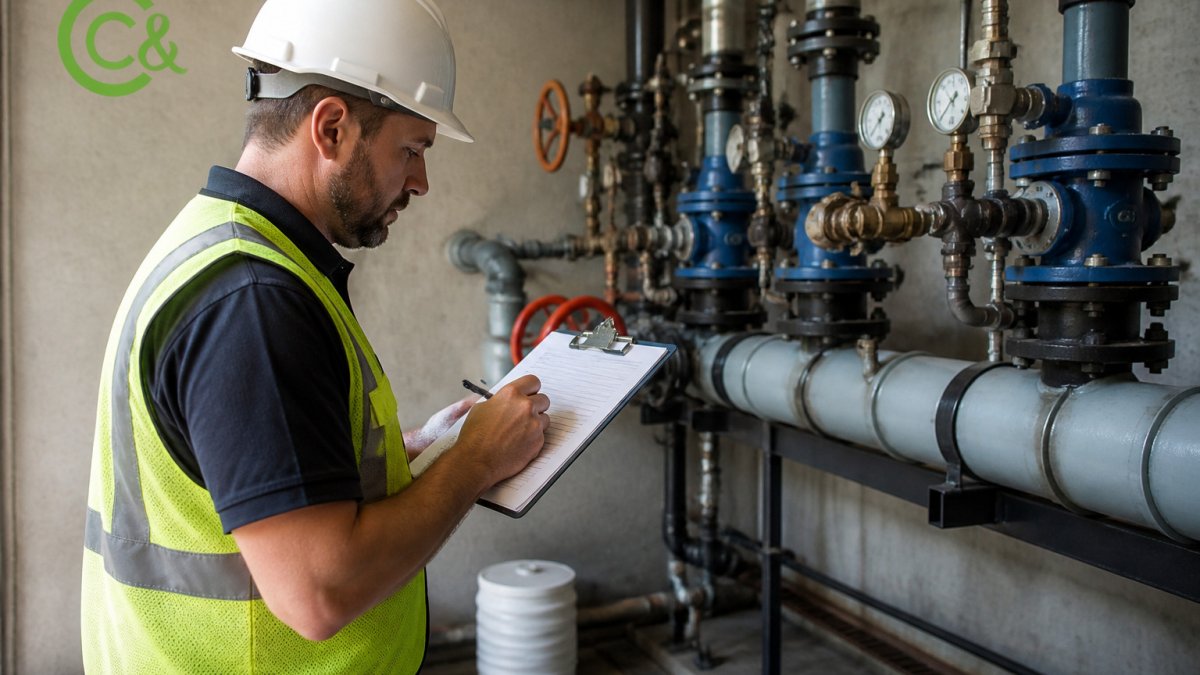
A commercial water system inspection is a structured review of the whole network, distinct from the asset-level checks above. It confirms that the system still delivers safe water at adequate pressure to every point of use, and it produces the data the rest of the plan depends on.
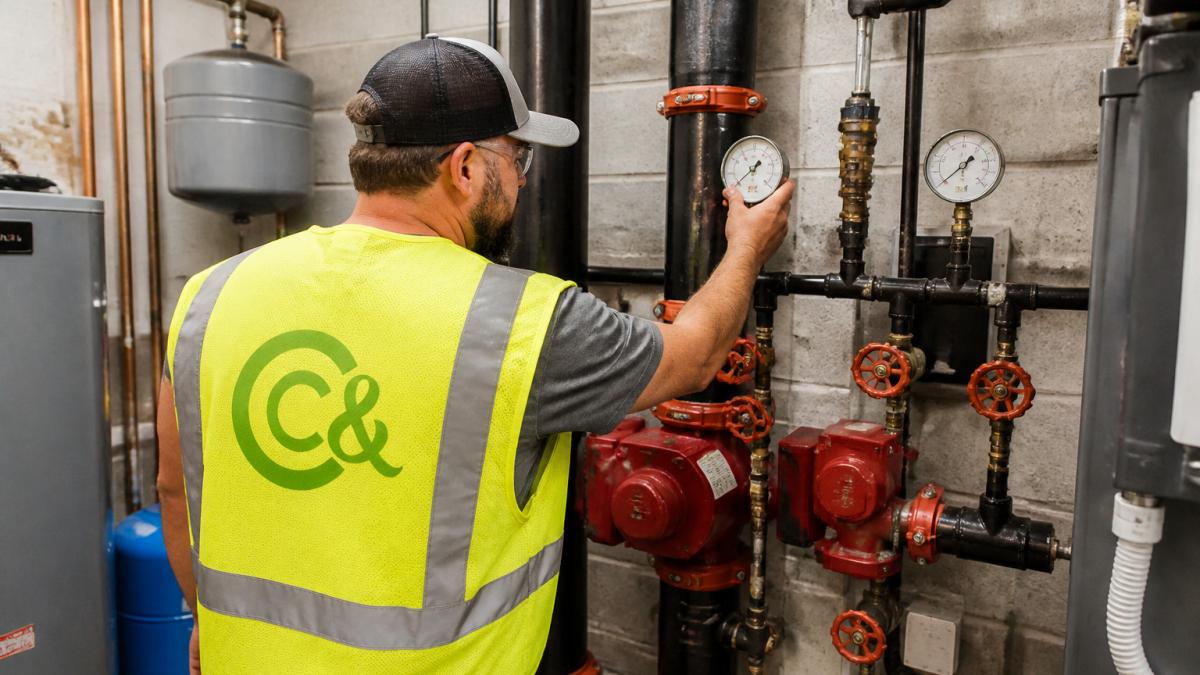
Check pressure at representative outlets and at the far end of the distribution. Inspect backflow prevention assemblies, which protect the supply from contamination and may require scheduled testing by a certified tester.
Measuring performance: maintenance KPIs
An inspection is only useful if it feeds measurable indicators. Track a small set consistently:
- Water loss: metered supply versus metered use, or night-flow baseline
- Leak response time: from report to isolation
- Unplanned downtime: hours lost to water-system failures
- Inspection completion: scheduled versus completed tasks
- Energy use per pump or per volume pumped
- Maintenance cost per asset, tracked against replacement value
Review these monthly and use the trend, not a single reading, to adjust intervals and budgets.
Emergency response and business continuity
Even a strong plan will face a failure. Have a written response for leaks, contamination alerts, pump failures, outages and flooding. The sequence is consistent: isolate the affected section using the valve map, escalate to the named on-call owner, communicate to occupants and, where required, the utility or health authority, then recover and document. Keep the valve map, contact list and shutoff procedures with the plan so response does not depend on one person's memory.
Compliance responsibilities
Water-quality, backflow-prevention, discharge and workplace-safety obligations vary by jurisdiction and facility type. Identify which apply to your site and keep test and inspection records current. When in doubt, confirm requirements with your local authority rather than assuming a generic checklist covers you.
Implementation ownership and contractor management
Assign a named owner for the plan, define who performs each task, and track work orders to completion. When using specialist contractors, set service-level expectations in writing, require asset-tagged reports, and review their findings against your own records. Train staff on shutoff locations and reporting so small issues are caught before they become emergencies.
Water System Maintenance Checklist for Facility Managers
Use this checklist as a starting point and adapt it to your facility:
- Confirm the current asset inventory matches the building as it stands
- Record meter readings and compare them against the prior month
- Inspect pumps for noise, vibration, seal leaks and motor condition
- Cycle isolation valves and check packing for drips
- Verify meter accuracy against a reference standard
- Check pressure at the most remote outlet and a central point
- Test backflow prevention assemblies on schedule
- Inspect storage tanks for integrity, sediment and cleanliness
- Review the work order log for repeat failures on the same asset
Keep this checklist with the asset records so every inspection feeds the next one.
When Commercial Water Line Repair Beats Patching
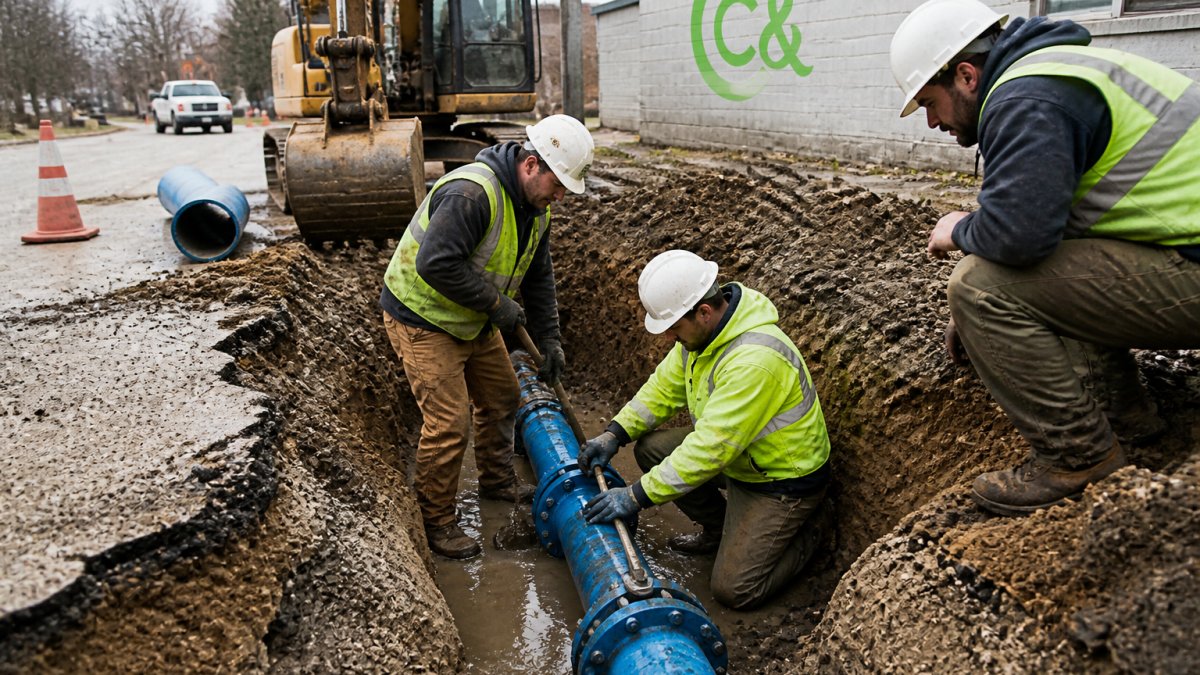
Patching a failing line buys time, but it may not solve the underlying problem. When a section has failed more than once, shows widespread corrosion, or sits beneath a area you cannot easily reach, repair is usually the better economic choice.
The decision comes down to remaining service life. If the line has years of reliable life left and the damage is localized, a targeted repair makes sense.
Scheduling Your First Infrastructure Assessment With C & C Environmental Services
The fastest way to build a reliable plan is to start with an accurate picture of your system. C & C Environmental Services provides sewer, water, septic, excavation and site development work across North Carolina, and our team can assess your commercial water infrastructure and help set the maintenance priorities that fit your facility. Visit C&C Environmental Services to see the full range of sewer, water and site services we offer statewide.
Frequently Asked Questions
What should a commercial water infrastructure maintenance plan include?
A solid plan starts with an inventory of every water asset, including pipelines, tanks, pumps, valves, meters and fixtures. Each asset should have a condition rating, a preventive maintenance task list, an inspection interval and an owner responsible for completing the work. The plan should also define budget projections for repairs and upgrades, the records you will keep, and an emergency response contact list so staff know who to call when a line fails outside business hours.
How often should commercial water systems be inspected?
Inspection frequency depends on the age of the system, the asset type and how heavily the facility uses water. Many facilities schedule routine visual checks monthly, performance checks such as pressure and flow tests quarterly, and a comprehensive condition assessment every one to three years. Critical assets, including main shutoffs, backflow preventers and booster pumps, usually warrant tighter intervals than low-risk fixtures.
What is preventive maintenance for a commercial water system?
Preventive maintenance means performing scheduled servicing before a component fails. For a commercial water system, this includes lubricating and testing pumps, checking valves for leaks and proper operation, calibrating meters, flushing lines to remove sediment, inspecting tanks and cleaning strainers. Catching a worn seal or a slow leak during routine service costs far less than responding to an emergency shutdown.
How do you create a water infrastructure maintenance schedule?
Start by listing every asset and ranking it by risk, considering failure consequences, age and condition. Assign each asset a task list and frequency based on manufacturer recommendations and your inspection findings. Then convert those tasks into a calendar that staff or contractors can follow, adding lead times for parts and budget approval. Review the schedule annually and adjust intervals based on the work orders you actually completed.
What are common signs of water line or sewer line problems?
Watch for unexplained drops in water pressure, recurring leaks, discolored or odorous water, gurgling drains, wet spots in landscaping and sudden increases in your water meter reading. Any of these signs can point to a leak, blockage or pipe deterioration. A camera inspection can confirm the cause before you commit to a repair method.
How can businesses reduce water infrastructure repair costs?
Reduce repair costs by shifting from reactive repairs to planned maintenance, tracking failure patterns in your records and replacing assets at the end of their useful life rather than after they fail. Leak detection and water audits also reduce water loss, which lowers utility bills. Pricing for repairs depends on the scope of work, access and site conditions, so request a written estimate and confirm what is included before work begins.
When should a commercial water line be repaired or replaced?
Repair is usually appropriate when damage is localized and the rest of the line is sound. Replacement becomes the better choice when the line shows widespread corrosion, repeated failures in different locations, or when the pipe material is known to be at the end of its service life. A condition assessment with camera inspection gives you the evidence to compare the two options on cost and long-term reliability.
What records should a water system maintenance plan keep?
Keep an asset register, inspection reports with dates and findings, a log of preventive maintenance tasks completed, work orders for repairs, parts replacement history, and water use or meter readings over time. Track key performance indicators such as number of unplanned outages, leak frequency, response time to failures and maintenance cost per asset. These records support budgeting, compliance documentation and decisions about upgrades.