 comparison
SQ Contractors Alternatives for Site Work
Table of Contents
- Why Site Work Contractor Selection Matters
- Key Evaluation Criteria for Site Work Contractors
- Sewer Line Repair vs Replacement: Understanding Your Options
- E/One Pump Installation Cost and Certified Service Providers
- Site Preparation, Excavation, and Grading Services
- Drainage, Water Management, and Earthwork Solutions
- Making Your Final Contractor Decision
- Frequently Asked Questions
Last Updated: October 16, 2026
Why Site Work Contractor Selection Matters
Choosing the right site work contractor is one of the most consequential decisions you'll make for your property. A poor choice leads to incomplete diagnostics, unexpected costs, and recurring problems, whether you're managing a residential sewer repair, a commercial development, or municipal infrastructure work.
Site work encompasses site preparation, excavation, grading, drainage management, and earthwork. Get these foundational tasks wrong and the entire project suffers; get them right and your infrastructure lasts decades.
At C & C Environmental Services, we've spent over 20 years helping property owners and developers navigate these decisions.
This guide shows how to evaluate site work contractors and make a decision that protects your property and budget.
Key Evaluation Criteria for Site Work Contractors
Before you compare site work contractors, know what actually matters.
Experience and specialization rank first. Look for specific experience with your project type: residential site preparation, commercial development, municipal infrastructure, or specialized work like E/One pump installations.
Diagnostic capability is critical. Many contractors quote a job without understanding what's underground.
Transparency in pricing protects you from the common contractor trap: finding "additional issues" once work begins. Ask how the estimate was calculated and what's included.
Warranty and accountability are your safety net. If the problem returns six months later, is the work backed by the company or are you on your own?
Service area and response time matter for urgent repairs. If your sewer line fails on a Saturday, can the contractor mobilize quickly?
| Evaluation Criteria | What to Look For | Why It Matters |
|---|---|---|
| Experience | 15+ years in your specific project type | Reduces costly mistakes and surprises |
| Diagnostics | Camera inspection, hydro jetting capability | Ensures accurate problem identification |
| Pricing | Upfront estimates, itemized breakdown | Prevents surprise costs mid-project |
| Warranty | Company-backed guarantee on work | Protects you if issues recur |
| Response Time | Same-day or next-day availability | Critical for urgent repairs and tight schedules |
| Certifications | E/One pump certification, state licensing | Ensures technical competency and legal compliance |
Sewer Line Repair vs Replacement: Understanding Your Options
One of the most common decisions homeowners face is whether to repair or replace a failing sewer line. This choice has massive financial and practical implications.
Repair suits localized damage: a crack in one section, a small break, or a tree root intrusion affecting a limited area.
Replacement becomes necessary when the line is extensively damaged, collapsed, or has multiple failure points, or has simply reached the end of its lifespan.
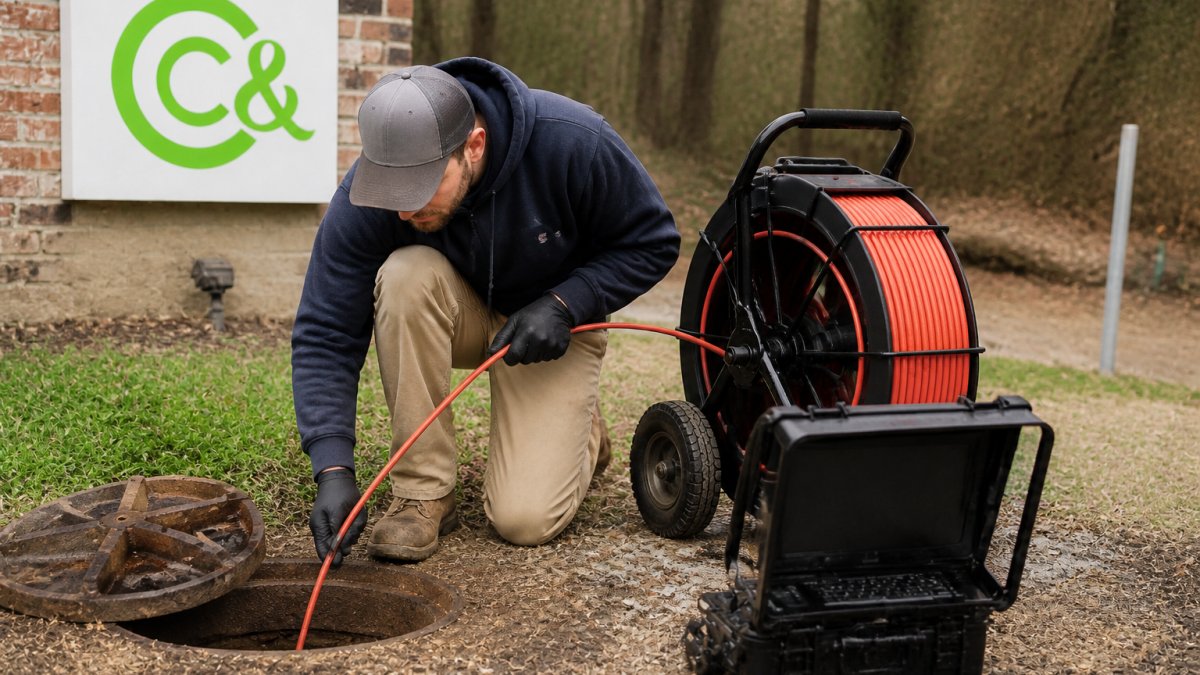
The key is an accurate diagnosis first. Camera inspection technology lets a contractor show you exactly what's happening and recommend honestly.
E/One Pump Installation Cost and Certified Service Providers
E/One pumps are specialized systems for properties where gravity-fed sewer lines aren't feasible. If your property sits below the municipal sewer line elevation, or you're developing a subdivision with varied topography, an E/One system may be your only option.
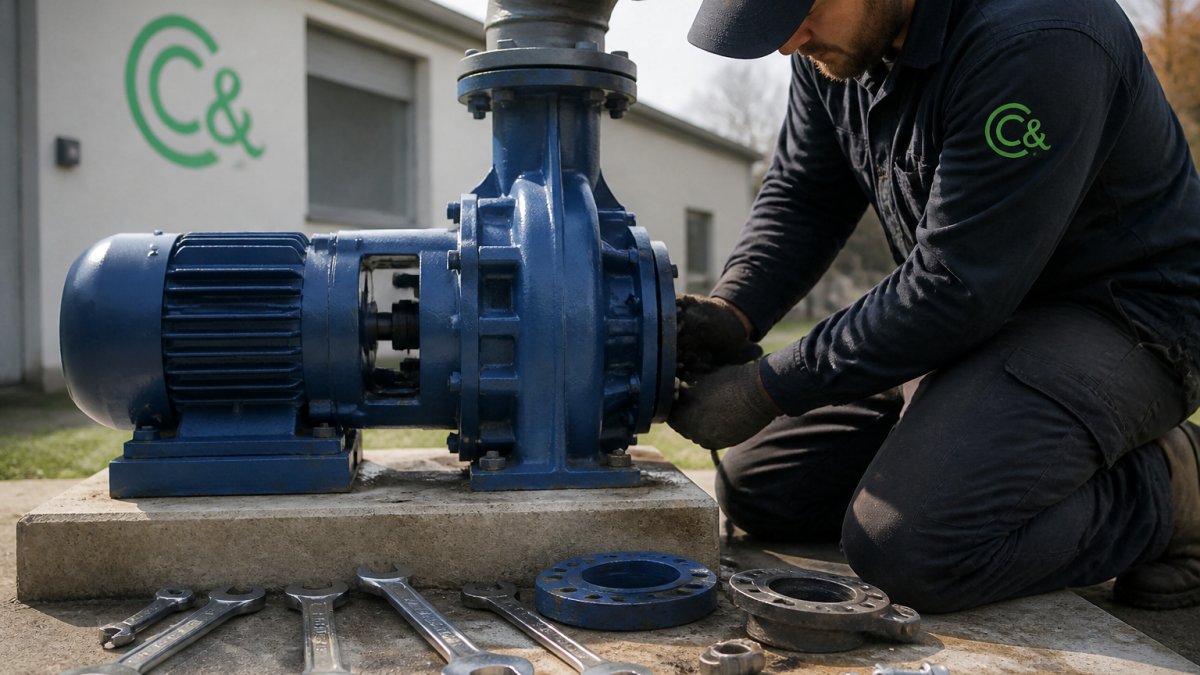
Installation requires specific expertise. You need an E/One-certified contractor who understands the electrical components, pressure tank configuration, and alarm systems that make these pumps work.
A poorly installed system fails repeatedly, and repairs get expensive fast.
When evaluating E/One quotes, verify certification, ask about experience with similar properties, and ask how they handle alarm monitoring and emergency response. A certified provider should walk you through the entire system and answer technical questions without hesitation.
C & C Environmental Services is E/One certified and has installed dozens of these systems, handling site assessment, pump selection, installation, and ongoing maintenance.
Site Preparation, Excavation, and Grading Services
Site preparation is where most projects begin and where the biggest gap opens between contractors who look similar on a bid sheet.
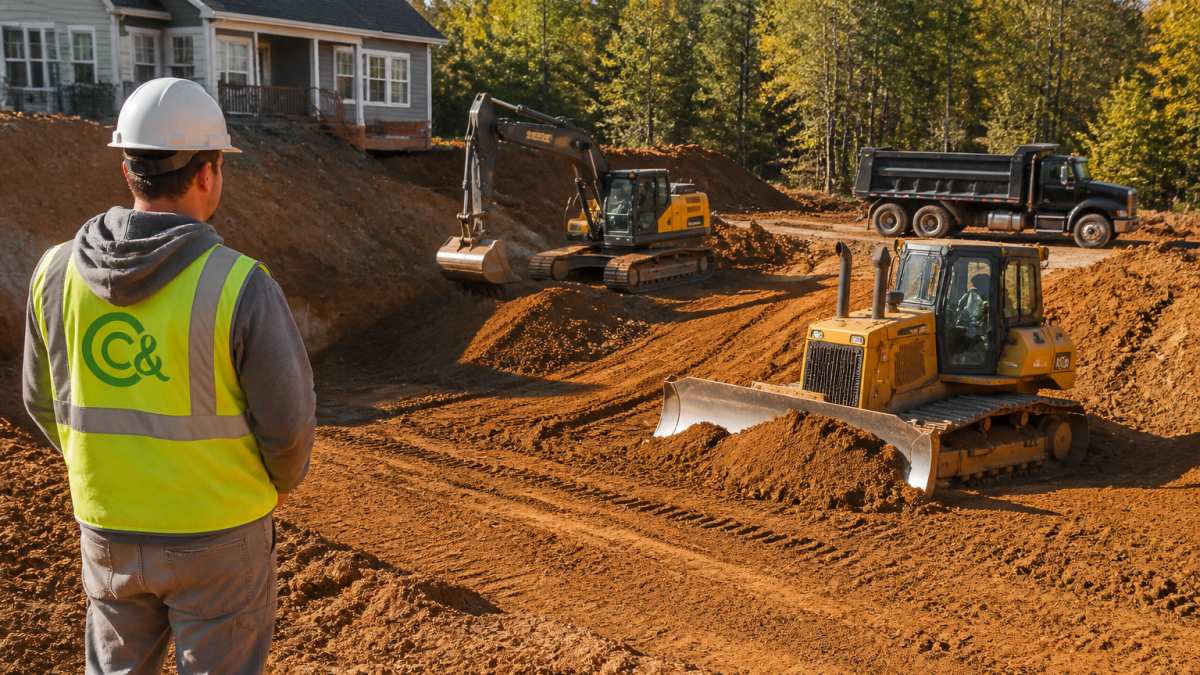
A typical residential or light commercial sequence looks like this:
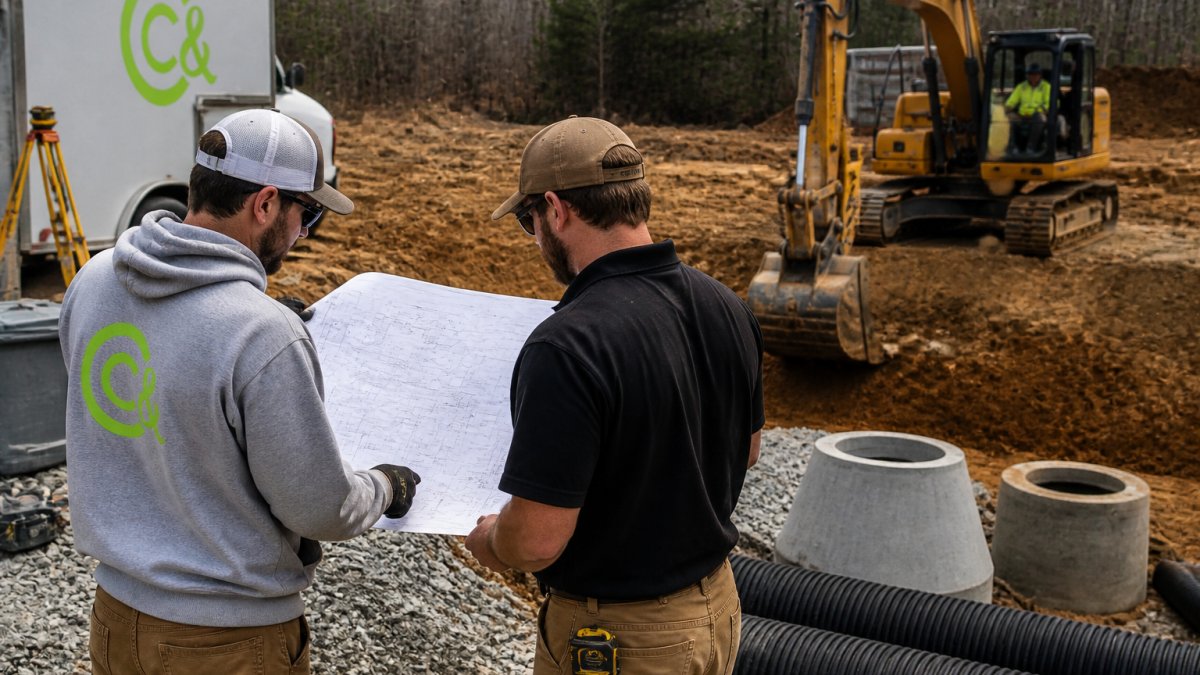
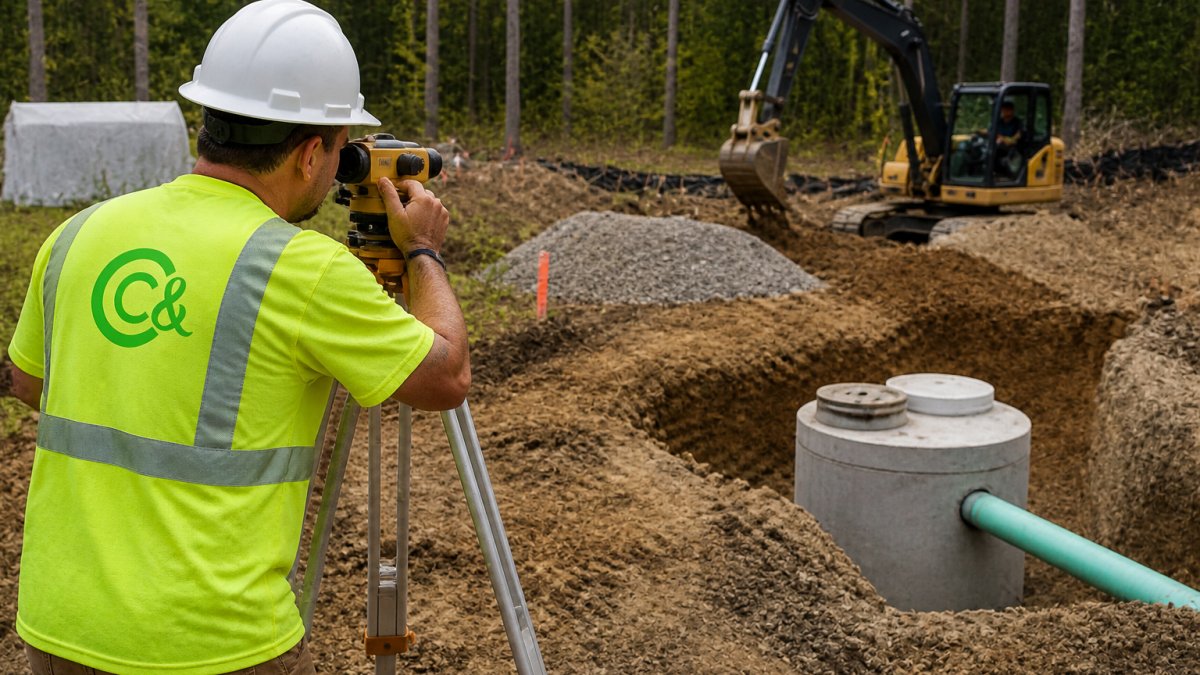
- Survey and layout. The contractor sets stakes, benchmarks, and control points from the civil plan. If the survey is wrong, everything downstream is wrong.
- Clearing and grubbing. Trees, stumps, brush, and root mats are removed. Stumps are typically grubbed out to a specified depth rather than cut flush, because buried wood decays and creates voids under future slabs and pavement.
- Topsoil stripping. Topsoil is stripped and stockpiled separately, usually to a depth called out on the plan. Topsoil is not structural fill and should not be buried in a building pad.
- Mass excavation and cut-and-fill. The contractor moves material from cut areas to fill areas, or hauls it off site if the balance doesn't work. On-site balance saves money; off-site haul adds trucking and disposal cost.
- Utility trenching. Sanitary, storm, water, electric, gas, and communications trenches are dug to grade and bedding is placed per the utility's standard detail.
- Structural fill and compaction. Fill is placed in lifts, moisture-conditioned, and compacted. Lift thickness and compaction percentage are usually specified by the geotechnical engineer.
- Rough and fine grading. The site is brought to rough grade, then fine grade for paving, slabs, and landscape.
- Proof-rolling and testing. A loaded dump truck or dedicated roller proof-rolls the subgrade to expose soft spots, and a third-party testing lab verifies density.
What separates good site contractors from average ones is how they handle the details inside those steps. A few things to ask about specifically:
- Compaction testing. Who pays for the third-party density tests, and how often are they run? A common specification is one test per lift per a set area, but the geotechnical report governs. A contractor who resists testing is a red flag.
- Moisture conditioning. Soil that is too wet or too dry will not compact to spec no matter how many passes the roller makes. Good crews add water or dry out material before compacting, not after a failed test.
- Subgrade preparation under slabs and pavement. A building pad and a parking lot have different tolerances. Ask how the contractor transitions between them.
- Rock and unsuitable material handling. If the plan assumed soil and the crew hits rock or organic muck, the contractor needs a written unit price for removal and replacement, not a verbal 'we'll work it out.'
- Erosion and sediment control. Silt fence, inlet protection, and stabilized construction entrances are usually required by the local stormwater permit. Ask who installs and maintains them.
Equipment matters, but not the way most homeowners assume.
For residential projects, site preparation typically includes clearing vegetation, removing obstacles, excavating for foundations and utilities, and grading for drainage. Commercial developments expand the scope to subdivision layout, access roads, utility trenches, and stormwater infrastructure.
Ask contractors about their equipment, crew experience, and how they verify compaction, and request examples of similar completed projects.
Drainage, Water Management, and Earthwork Solutions
Drainage is the hidden hero of site work: done right it's invisible, done wrong it causes constant problems. The outcome usually comes down to whether the contractor treated drainage as a designed system or a slope eyeballed on the last day of grading.
Water management starts with understanding your site's natural drainage patterns, where water flows, soil composition, and how that affects grading and utility placement. The answers come from a few specific inputs:
- A topographic survey showing existing elevations and flow paths.
- A geotechnical report describing soil types, permeability, groundwater depth, and bearing capacity.
- A stormwater design prepared by a civil engineer, often required by the local jurisdiction for new construction and redevelopment.
- Local stormwater regulations, which in most jurisdictions set requirements for peak flow, water quality treatment, and on-site retention or detention.
With those inputs, the contractor builds one or more of the following systems:
- Surface grading and swales. Grassed or lined swales convey sheet flow to a discharge point. Slope, cross-section, and lining are specified on the plan.
- Storm sewer. Catch basins, inlets, manholes, and pipe convey concentrated flow to a discharge point or detention facility.
- Detention and retention basins. Detention holds stormwater temporarily and releases it at a controlled rate; retention holds it permanently and relies on infiltration or evaporation. The distinction matters for maintenance and for the permit.
- Subsurface drainage. French drains, footing drains, and underdrain systems intercept groundwater before it reaches foundations or pavement subgrade.
- Erosion and sediment control. Silt fence, check dams, inlet protection, and stabilized construction entrances are installed before earthwork begins and maintained through the project.
Earthwork and cut-and-fill operations are central to most site development. The contractor must calculate how much soil to cut from high areas and fill in low areas, minimize waste, and ensure proper compaction, requiring experience with grading plans, GPS modeling, and construction estimating. Modern machine control loads a 3D site model into the excavator or grader, letting the operator hit design grade in fewer passes and reducing stakeout time.
A few practical points that separate a well-run earthwork job from a problem job:
- Balance the dirt. If cut and fill are close to balanced, the contractor avoids hauling material off site and importing new material. That is usually the single biggest cost lever on a mass-grading job.
- Watch the shrink and swell. Excavated soil bulks up when loosened and shrinks when compacted. A contractor who bids off bank volume without accounting for shrink and swell will either run short or over-order.
- Protect the subgrade. Once the subgrade is proof-rolled and accepted, it needs to be protected from construction traffic and weather. A subgrade that gets rutted out in a rainstorm has to be reworked.
- Plan the outfalls. Every drainage system needs a legal, functioning discharge point. A system that discharges onto a neighbor's property or into a storm sewer without permission is a liability.
Ask each contractor to walk you through their drainage plan, cut-and-fill balance, and erosion control approach, those who explain all three clearly are worth shortlisting.
Making Your Final Contractor Decision
After narrowing your choices, here's how to make the final call.
Get multiple quotes. At least three, to sense the market and spot outliers.
Check references. Call previous clients and ask: Did the contractor finish on time? Were there surprise costs? Did the work hold up?
Verify credentials. Confirm licensing, insurance, and certifications.
Review the estimate carefully. A good estimate breaks down the work, explains the scope, and itemizes costs.
C & C Environmental Services has built 20 years of reputation on honest estimates, transparent communication, and work backed 100% by the company.
Frequently Asked Questions
What should I look for when comparing site work contractors?
Prioritize contractors with verifiable experience in your specific project type, residential, commercial, or municipal. Request references from recent projects of similar scope. Confirm they have state-of-the-art diagnostic equipment (camera inspections, hydro jetting capability) and transparent, upfront estimates with no hidden fees. Ask how they handle site conditions and whether they provide 100% workmanship guarantees. Experience with your local soil and drainage patterns matters significantly.
How does sewer line repair vs replacement affect my project timeline and budget?
Repair typically costs less and takes 1-3 days for localized issues like blockages or small breaks. Replacement requires excavation, removal of the old line, and installation of new pipe, usually 3-7 days depending on length and site access. Repair works for minor damage; replacement is necessary for widespread deterioration, multiple breaks, or failed repairs. A camera inspection reveals which option your situation requires, preventing costly guesswork.
What makes E/One pump installation cost vary between contractors?
Pricing depends on site conditions, electrical work required, permit fees, and whether existing infrastructure must be modified. Warranty coverage and follow-up service also affect total cost. Request detailed estimates that itemize labor, equipment, permits, and any site-prep work. Certified installation protects your long-term system reliability.
How can I verify a contractor won't overcharge me or find unnecessary 'extra issues'?
Request a written estimate before work begins that specifies scope, materials, labor hours, and total cost. Ask the contractor to explain their diagnostic process, camera inspection and soil analysis should precede any pricing. Check references and ask previous clients directly whether estimates matched final invoices.
The right contractor protects your property and your budget. C & C Environmental Services brings over 20 years of experience, E/One certification, and upfront honest estimates to every project. Our state-of-the-art camera inspections and hydro jetting diagnostics ensure accurate problem identification. Contact us today for a transparent estimate and the peace of mind that comes with 100% company-backed workmanship.