 blog
blog
Sewer Line Repair vs Replacement: A Complete 2026 Guide
Table of Contents
- Sewer Line Repair vs Replacement: Key Differences at a Glance
- Signs of a Broken Sewer Line You Shouldn't Ignore
- How a Sewer Line Camera Inspection Drives the Decision
- Sewer Pipe Lining vs Replacement: Which Method Fits Your Line?
- Sewer Line Repair Cost vs Replacement Cost: What Drives the Price
- Permits, Property Boundaries, and Who's Responsible
- Insurance, Financing, and Emergency Response
- Conclusion: Making the Right Call for Your Sewer Line
- Frequently Asked Questions
Last Updated: October 9, 2026
Sewer Line Repair vs Replacement: Key Differences at a Glance
Sewer line repair vs replacement comes down to one question: is the damage isolated, or has the pipe reached the end of its working life? At C & C Environmental Services, we've run camera inspections on thousands of lines across North Carolina, and the answer usually shows up on the monitor before anyone picks up a shovel.
Most homeowners assume a backup means a dead pipe. Often it doesn't. A single root intrusion or hairline crack in an otherwise sound line is a repair job. A line collapsing in three places, or cast iron corroding for forty years, is a different conversation.
Below, we break down the decision the way we make it in the field: inspection first, then method, then cost.
Comparison Table: Repair vs Replacement
| Factor | Sewer Line Repair | Sewer Line Replacement |
|---|---|---|
| Best for | Isolated damage, single crack, one root intrusion | Extensive damage, collapsed or aging pipe |
| Disruption | Minimal, often trenchless | Higher, especially with excavation |
| Lifespan | Depends on existing pipe condition | Full new service life |
| Upfront cost | Lower | Higher |
| Long-term cost | Can recur if pipe is failing elsewhere | One-time investment |
Signs of a Broken Sewer Line You Shouldn't Ignore
The clearest signs of a broken sewer line are repeated backups, slow drains throughout the house, sewage odors, and soggy yard patches.
Watch for these signals:
- Multiple drains draining slowly at the same time
- Sewage smell indoors or near the cleanout
- Gurgling sounds from toilets after you run a sink
A single backup after heavy use might just be a blockage.
How a Sewer Line Camera Inspection Drives the Decision
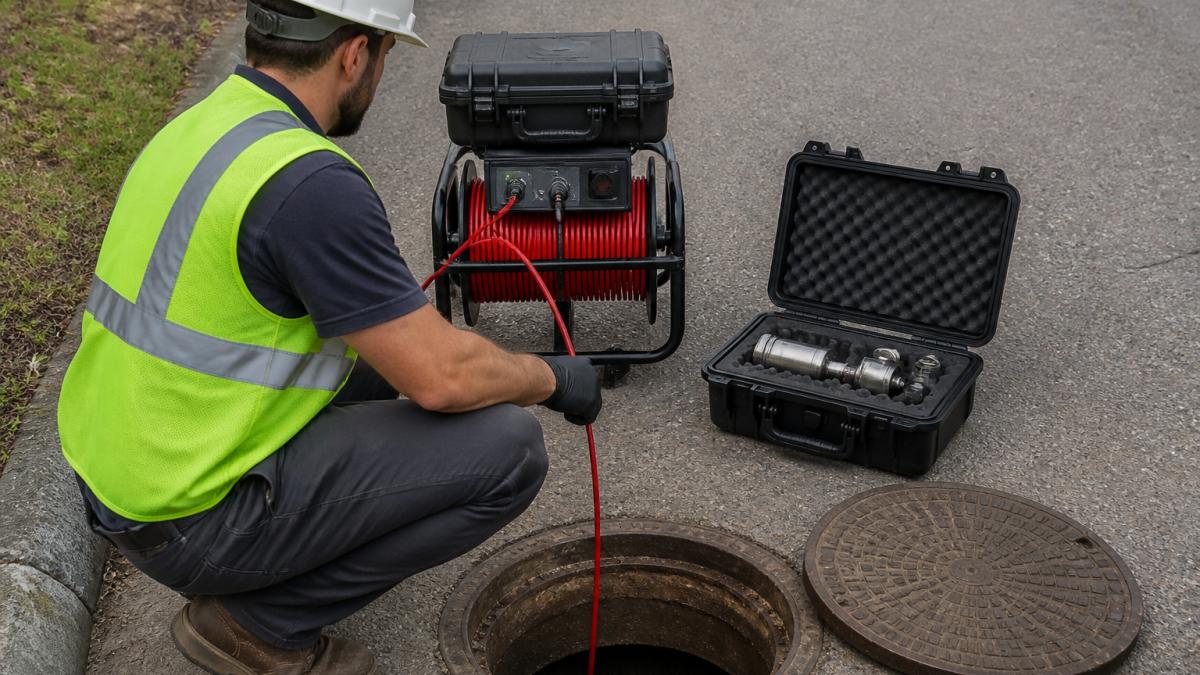
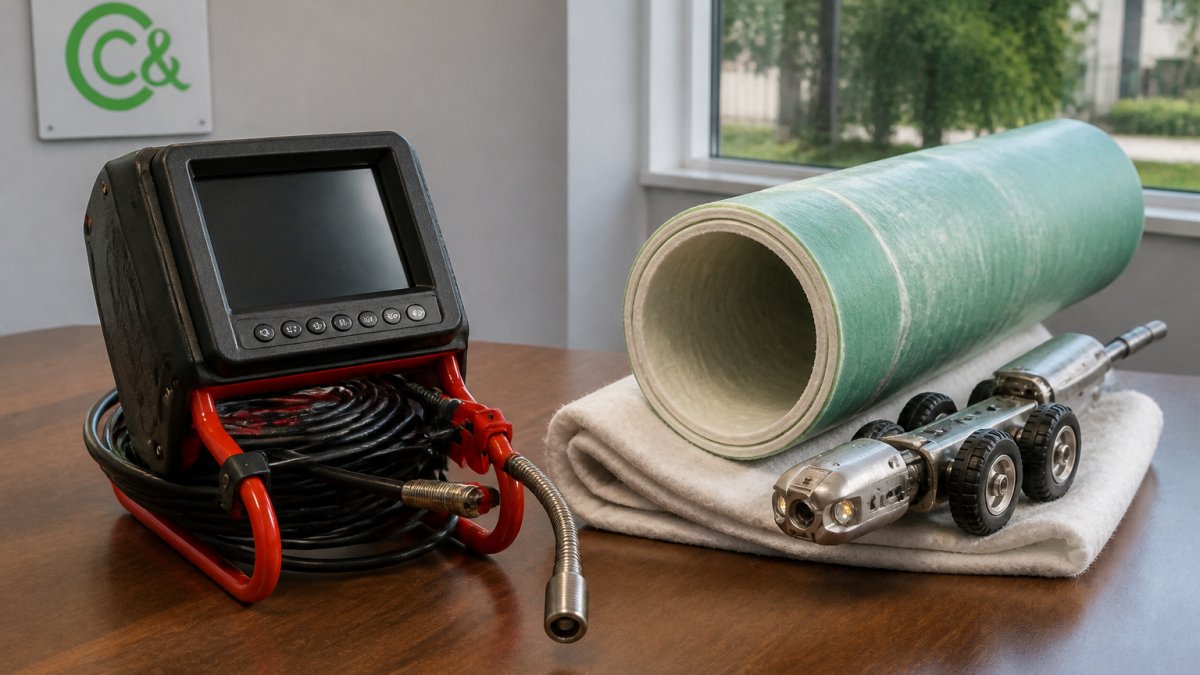
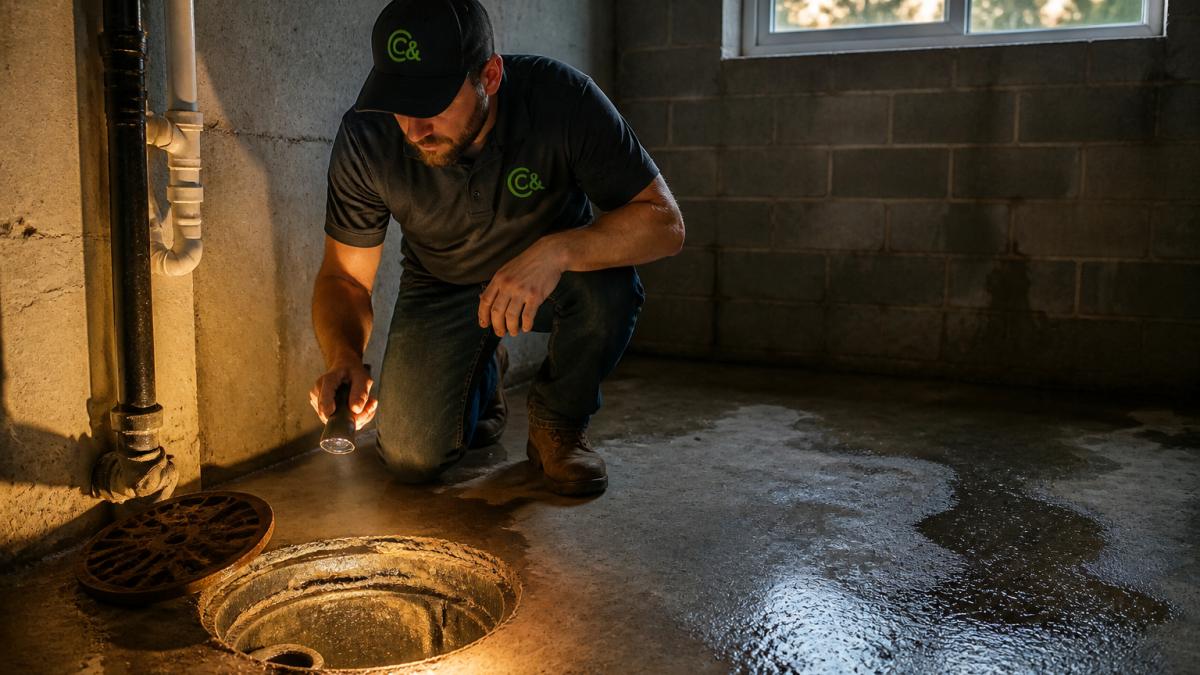
A sewer line camera inspection is the single most important step before choosing repair or replacement. A small camera travels the pipe and shows the exact location, type, and severity of the damage, so the decision is based on what's actually there rather than guesswork.
This is where estimates go wrong: a contractor who quotes a fix without a camera inspection is guessing. We've seen lines cleared three times before anyone put a camera down and found a collapsed section two feet from the cleanout.
What the Camera Reveals: Isolated Damage vs. Extensive Damage
The camera separates two problems. Isolated damage is a single defect in an otherwise healthy pipe: one crack, one root intrusion, one offset joint. Extensive damage means the pipe is failing in multiple places, has lost its shape, or is breaking down along its whole length.
- Isolated damage: repair is usually the right call
- Extensive damage: replacement is usually the right call
- Aging pipe with recurring problems: replacement prevents repeat visits
Sewer Pipe Lining vs Replacement: Which Method Fits Your Line?
Sewer pipe lining vs replacement is a question of how much of the pipe is still sound. Lining installs a new inner surface inside the existing pipe, which works when the old pipe is structurally intact but worn. Replacement removes the old pipe entirely, the durable answer when the line is failing throughout.
Trenchless Repair and Pipe Lining Methods
Trenchless repair keeps your yard, driveway, and landscaping intact. A liner is pulled or pushed through the existing pipe and cured in place, forming a smooth new interior that seals cracks and covers root entry points.
Where it falls short: lining needs a pipe that still holds its shape. If the line is collapsed or badly offset, there's nothing solid to line.
Traditional Excavation and Replacement Methods
Traditional replacement opens a trench, removes the old pipe, and installs new PVC or HDPE pipe. It's more disruptive, but the most reliable long-term solution when the pipe itself has failed.
Access, pipe length, and depth affect how much excavation is needed. A shallow line under a lawn is straightforward; a deep line under a driveway changes the scope quickly.
Sewer Line Repair Cost vs Replacement Cost: What Drives the Price
Sewer line repair cost and replacement cost are not single numbers, they're the sum of several line items, and the same job can land in very different places depending on which apply. Most contractors quote a lump sum, which is why two estimates for the "same" repair can differ by thousands. Ask for the breakdown below to compare bids honestly.
What You Are Actually Paying For
A complete sewer line estimate typically includes:
- Inspection and diagnosis, a camera inspection and locate, usually a few hundred dollars, sometimes credited toward the work if you proceed.
- Permits and utility coordination, required in many jurisdictions for replacement and any work touching the public right-of-way; fees and timelines vary by city and county.
- Excavation or access, the largest swing factor. Hand-digging versus machine excavation, and cutting through concrete, asphalt, or mature landscaping, changes the number more than pipe material does.
How Length, Depth, Access, and Location Move the Number
Four variables drive most of the spread between estimates:
- Length, a few feet versus a full run from the house to the main. Cost scales roughly with linear feet, but fixed costs (inspection, permits, mobilization) do not.
- Depth, a shallow line under a lawn is straightforward. A line eight or ten feet down, or under a slab, requires shoring, more excavation, and more restoration.
- Access, can equipment reach the line, or does the work happen by hand in a tight side yard? Limited access raises labor hours fast.
Because these variables interact, phone quotes are unreliable. A reputable contractor inspects first, then prices the specific site.
Lifespan, Warranties, and Lifecycle Cost
Upfront price is only half the comparison. The other half is how long the result lasts and what's covered if it fails.
- Repair lifespan depends on the surrounding pipe. A patch on a sound line can serve for years; a patch on a line corroding elsewhere often fails again, sometimes within months, because it didn't address the rest of the pipe.
- Replacement lifespan is the full service life of the new pipe. PVC and HDPE last decades under normal conditions, which is why replacement is framed as a one-time cost.
- Warranties differ by scope. A repair warranty usually covers the patch and its labor; a replacement warranty covers the new pipe and installation. Read the exclusions, root intrusion after the warranty period, third-party digging damage, and settlement are common.
how to read a contractor estimate and what to ask before signing
Permits, Property Boundaries, and Who's Responsible
This is the section most articles skip, and it surprises homeowners after the work is done. Before approving any repair or replacement, establish three things: where your responsibility ends, whether a permit is required, and whether anyone else has a legal interest in the ground you're about to dig up.
Where the Homeowner's Responsibility Usually Ends
The common pattern is a split at or near the property line:
- The lateral (service line), the pipe from your home to the public main, is typically the homeowner's responsibility, even under a sidewalk or street.
- The public main, the larger municipal sewer in the street or easement, is typically the utility's responsibility.
- The connection point, where the lateral meets the main, matters most, and its exact location isn't always where the property line is drawn on a plat.
Don't assume the split follows the fence or front yard. Confirm it with your utility or public works department and ask them to identify the connection point. A camera inspection and locate can pin it down.
Easements and the Public-Main Connection
Many laterals cross an easement, a strip of your property the utility can access and work in. If your line runs through one:
- The utility may enter and work without your permission, and may be responsible for restoring the surface afterward.
- You may be restricted from building over it, a shed, deck, or driveway on top complicates the repair and future utility work.
- If the line crosses a neighbor's property, get the boundary and easement confirmed in writing before excavation. Verbal understandings don't hold up when a driveway needs replacing.
Permits: What Triggers Them and Why They Matter
Permit requirements vary, but the general pattern is:
- Repairs, often no permit for a spot repair on private property, though some jurisdictions require one below a certain depth or for anything tying into the main.
- Replacements, frequently require a permit, especially when work touches the public right-of-way, sidewalk, or street.
- Inspections, permitted work usually requires an inspection before backfill. Skipping it can create problems at resale when a buyer's inspector or title search surfaces unpermitted work.
Call your permitting office before work begins and ask: does this scope require a permit, and does it require an inspection before backfill? Get the answer in writing if you can.
Who Arranges and Pays
Responsibility and payment don't always sit with the same party:
- If the failure is on your lateral, you arrange and pay, even if the pipe is under a public sidewalk.
- If the failure is in the public main, the utility handles it, but may still hold you responsible for the lateral on your side of the connection.
- If a third party damaged the line, a contractor, nearby utility digging, a tree service, that party may be liable. Document everything and report it promptly.
how to find your local permitting office and utility service line responsibility
Insurance, Financing, and Emergency Response
Standard homeowners insurance often excludes sewer line failure from normal wear, though some policies cover sudden damage. Many utilities offer service line coverage as an add-on, and financing exists for larger replacement jobs.
When a backup is active, the priority is stopping the exposure, then diagnosing. We handle emergency calls with camera diagnostics first so the fix is based on facts.
Conclusion: Making the Right Call for Your Sewer Line
The right choice between sewer line repair vs replacement starts with a proper inspection, not a sales pitch. Isolated damage gets repaired. A failing, aging line gets replaced. Getting that call right the first time saves money and repeat digging.
That's the work C & C Environmental Services does every day. As a family-owned company with over 20 years of experience, we use state-of-the-art camera inspections and full diagnostics to find the real problem, then give you upfront, honest estimates with no surprise pricing.
Contact us today to schedule your inspection and get a straight answer on repair versus replacement.
Frequently Asked Questions
How do I know if my sewer line is broken?
Watch for sewage backups in multiple drains, slow draining throughout the house, gurgling toilets, and soggy or unusually green patches in the yard. A sulfur smell indoors or outdoors is another red flag. These signs of a broken sewer line point to a blockage, crack, or collapsed pipe. A camera inspection confirms the exact cause and location, so you know whether a spot repair or full replacement is needed.
What is the difference between sewer line repair and replacement?
Sewer line repair fixes isolated damage, such as a single crack, root intrusion, or small offset, while leaving the rest of the pipe in place. Replacement removes the damaged section or the entire line and installs new pipe. Repair costs less upfront and causes less disruption, but replacement delivers a longer service life and is often the better call when pipes are aging, collapsed, or failing in multiple spots.
Can a sewer line be relined without digging?
Yes. Trenchless pipe lining restores a damaged sewer pipe from the inside by inserting a resin-saturated liner that cures into a new pipe wall. This method works well for cracks, root intrusion, and corrosion in pipes that still hold their shape. A collapsed or severely misaligned pipe may not be a candidate. A camera inspection determines whether lining is viable or whether excavation is the safer route.
How much does sewer line repair or replacement cost?
Sewer line repair cost depends on damage severity, pipe length, depth, access conditions, and pipe material. Replacement costs more upfront because it involves new pipe, more labor, and possibly landscaping restoration. Trenchless methods often reduce restoration expenses compared to traditional excavation. Because every property is different, request an itemized, upfront estimate so you can compare repair and replacement options side by side.