 how-to
Modern Sewer Diagnostic Technology Explained
Table of Contents
- What Modern Sewer Diagnostic Technology Actually Does
- How a Sewer Camera Inspection Works Step by Step
- Sonar Sewer Inspection for Below-Waterline Conditions
- Sewer Pipe Defect Detection: Cracks, Root Intrusion, and Blockages
- Sewer Inspection Tools: Matching the Method to the Problem
- How to Read an Inspection Report and Footage
- Limitations, Accuracy, and What Technology Cannot Tell You
- Conclusion
- Frequently Asked Questions
Last Updated: October 4, 2026
What Modern Sewer Diagnostic Technology Actually Does
Modern sewer diagnostic technology lets crews see inside a buried pipe without digging it up.
A camera or sonar tool gives you a remote inspection of the pipe interior, with no excavation just to look.
Modern sewer diagnostic technology is the set of tools, cameras, crawlers, sonar heads, and sensors, that inspect a pipe from the inside and turn what they see into usable data.
How a Sewer Camera Inspection Works Step by Step
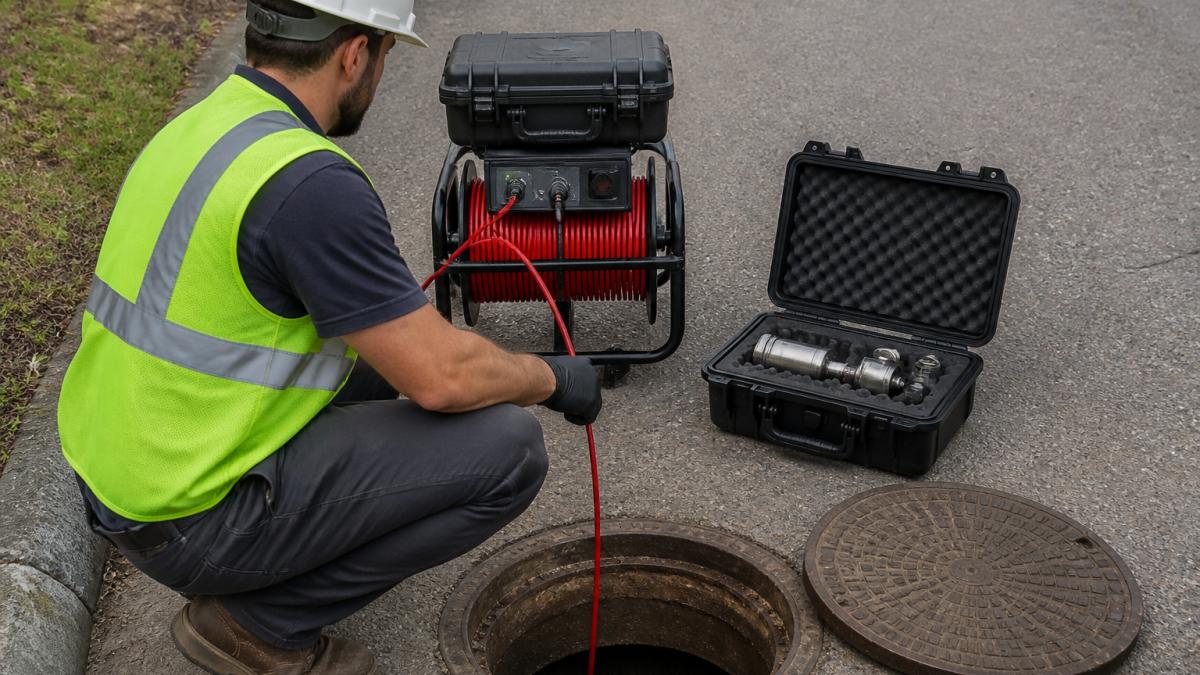
A sewer camera inspection pushes a waterproof camera through the pipe and records what it sees. The technician watches live and marks defects with location data:
- Locate access points. The crew opens a cleanout or manhole.
- Clean the line if needed. Debris blocks the view, so heavy buildup gets cleared first.
- Feed the camera. A flexible cable or crawler moves through the pipe.
- Watch and record. The camera sends live video to a monitor.
- Mark defects. The technician logs cracks, roots, and blockages by distance.
- Confirm location. A locator pinpoints the defect depth and position.
- Review the footage. You get a condition assessment and a repair plan.
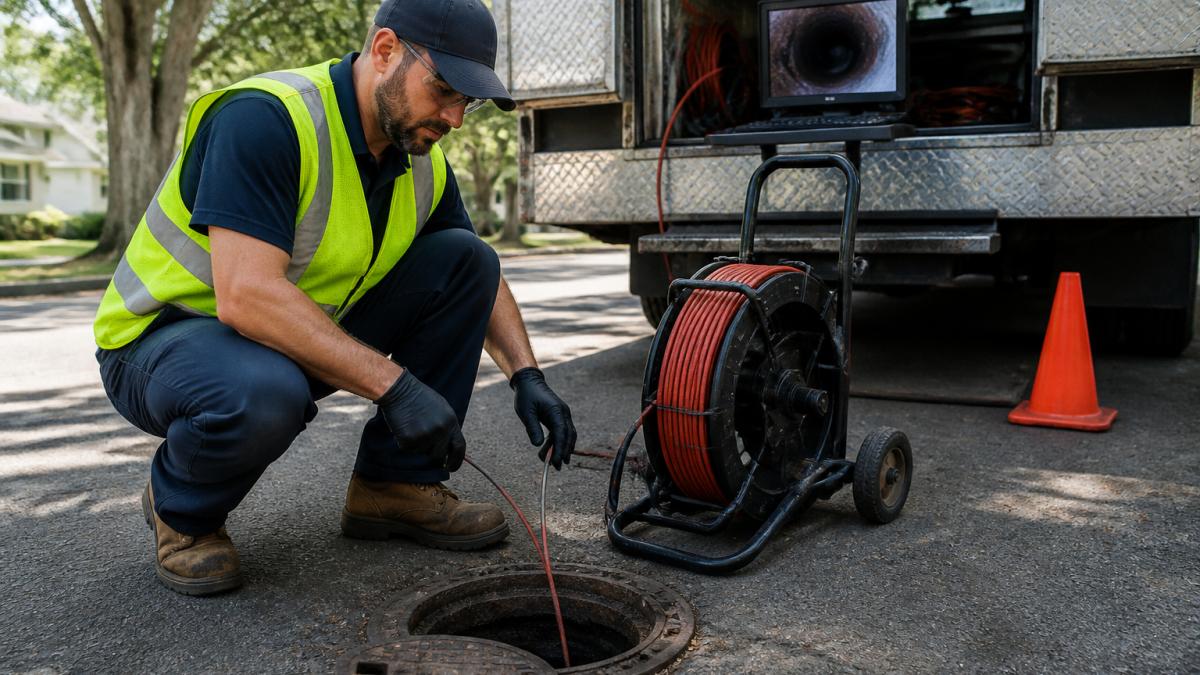
CCTV, HD Cameras, and Zoom Cameras
CCTV inspection is the older standard, with limited image quality. HD cameras changed that, revealing hairline cracks and early root intrusion that older cameras missed.
A zoom camera adds close-up detail. When the crew spots something odd, they zoom in rather than guess. The U.S. Environmental Protection Agency guidance on pipe condition assessment supports using visual inspection as a core part of asset management.
Robotic Crawlers and Sensor Data Collection
A robotic inspection crawler carries the camera through larger pipes on tracks, handling bigger diameters than a push cable. Crawlers also carry sensors that collect location data, tilt, and depth alongside the video, turning a video into a trackable record.
Sonar Sewer Inspection for Below-Waterline Conditions
Sonar sewer inspection uses sound waves to map a pipe when the camera cannot see. If the line is full of water, a camera just shows murk; sonar does not care.
The trade-off is real. Sonar shows shape and blockage, not fine surface detail. It cannot tell you if a crack is new or old. So crews pair it with a camera when possible.
Sewer Pipe Defect Detection: Cracks, Root Intrusion, and Blockages
Sewer pipe defect detection is the point of the whole inspection.
Blockage detection is often the urgent one. A camera shows whether the blockage is grease, roots, or a broken pipe. Grease gets hydro jetted.
Pipe condition also matters for planning. The American Society of Civil Engineers infrastructure report card has tracked the strain on the nation's buried pipe networks for years.
Sewer Inspection Tools: Matching the Method to the Problem
No single tool fits every job. The right choice comes down to four variables: pipe diameter, water level, access, and suspected defect.
Start With the Four Variables
1. Pipe diameter. Push cables work in lines up to roughly 6 inches.
2. Water level. At normal flow depth, a camera sees the crown and most of the wall.
3. Access. A yard cleanout gives you a short push; a manhole gives you a crawler launch point on a longer main.
4. Suspected defect. Grease and soft blockages are a jetting question, though a camera confirms the fix.
When to Use Each Method
Method | Best For | Limitation |
|---|---|---|
Push camera | Small lines (up to ~6 in.), quick checks, residential laterals | Blocked by heavy debris; cannot navigate sharp bends |
HD / zoom camera | Fine cracks, joint separation, close detail on a suspect spot | Needs a clear, drained view |
Robotic crawler | Large mains, long runs, pipes too big for a push cable | Higher setup time; needs manhole access |
Sonar | Below-waterline mapping, surcharged lines, heavy flow | No surface detail; cannot date a crack |
Sensors + AI analysis | Condition tracking over time, repeat inspections | Needs a clean baseline and consistent location coding |
The Decision Logic in Plain Terms
- Can you see the pipe? Use a camera, a push camera in small lines, a crawler in large ones.
- Is water blocking the view? Add sonar. A combined crawler with a camera and a sonar head gives you above- and below-waterline coverage in one pass.
- Is the pipe large? Use a crawler; push cables lose traction and steering in bigger diameters.
- Do you need to track change over years? Lean on sensors and consistent location coding so this year's run lines up with last year's.
- Is the problem grease or soft debris? Jet first, then camera to confirm the line is clean and the wall is intact.
A Note on Combining Tools
The strongest inspections are rarely one-tool jobs. A common pattern is a crawler carrying both a camera and a sonar head, with a surface locator marking depth and position. That covers the crown, the invert, and the wetted section in one run, and produces a record you can compare against the next inspection.
What Drives the Choice More Than Anything
Operator skill and tool calibration matter as much as the method. A well-trained technician with a mid-range camera will out-diagnose an untrained one with the newest crawler, because reading a pipe is a learned skill, the tool is only as good as the person interpreting it.
How to Read an Inspection Report and Footage
An inspection report turns footage into decisions. The inspection footage is the raw record; the report is the summary you act on.
The Anatomy of a Standard Report
Most reports follow a similar structure, whether from a residential lateral or a municipal main:
- Header: address, date, weather, pipe material, diameter, and access point used.
- Run log: the camera's path, with distance from the access point marked as it moves.
- Defect entries: each finding, coded by type and severity, with distance and (when a locator is used) depth and surface position.
- Condition rating: an overall score for the run, often split into structural and maintenance categories.
- Recommendations: what to repair, monitor, or leave alone.
Defect Terminology You Will See
Reports use shorthand. The most common terms:
- Crack, a break in the pipe wall. Lengthwise cracks run along the pipe; circumferential cracks wrap around it. Circumferential cracks near a joint are often more serious.
- Fracture, a crack that has opened enough to displace the pipe wall.
- Offset, two pipe sections that no longer line up, creating a lip that catches debris.
- Root intrusion, roots entering at a joint or crack. Small root hairs are a maintenance item; a root mass that fills the pipe is a blockage.
- Settlement, a sag where the pipe has dropped, creating a low spot that holds water.
Severity and Location: The Two Things That Matter Most
A defect without a location is a rumor; a defect without a severity is a guess. Good reports give you both.
Severity is usually a 1-to-5 rating per defect, where 1 is minor and 5 is structural failure.
Location is distance from the access point, ideally with depth and surface position from a locator. A crack at 42 feet from the cleanout, 6 feet deep, under the driveway is actionable.
How to Watch the Footage
You do not need to be a technician to spot the big things. Watch for:
- Roots entering at joints, look for the joint line and any material crossing it.
- Cracks running lengthwise or around the pipe, note whether the crack is open or hairline.
- Standing water that should not be there, a low spot or a blockage downstream.
- Offsets where pipe sections no longer line up, the camera will bump or tilt as it passes.
- Active infiltration, water entering from a joint or crack, pointing to a groundwater or stormwater connection.
From Findings to Decisions
The report should make the next step obvious:
- Structural defects (cracks, fractures, offsets, collapses): repair or replace. These will not heal on their own.
- Maintenance items (grease, small roots, minor debris): clean and monitor. Schedule a follow-up.
- Infiltration: investigate the source, a joint issue, a crack, or a connection that should not be there.
- No findings: keep the footage. A clean baseline is valuable the next time something changes.
Questions Worth Asking the Inspector
- What reporting standard did you use, and what does the severity scale mean?
- Where exactly is the worst defect, in distance and depth?
- Is the defect structural or maintenance?
- What happens if we monitor instead of repair?
- Can I get the raw footage and the report as files?
A vague report that says "pipe is bad" is not useful. You want specifics: what, where, how severe, and how urgent. The value of a modern inspection is not the video, it is the decision the video supports.
Limitations, Accuracy, and What Technology Cannot Tell You
Every method has limits, and honest crews say so. A camera cannot see through standing water. Sonar cannot show surface detail.
Technology also cannot tell you everything. It shows the pipe now, not how long a defect has been there, and cannot promise a repair will last. AI analysis still needs human review to catch errors.
That is why guidance from the National Association of Sewer Service Companies stresses trained operators and standard reporting. Good data beats fast data.
Conclusion
A sewer problem never gets cheaper by waiting. The right diagnostic tool finds the real cause fast, so you fix it once instead of patching it twice. C&C Environmental Services brings over 20 years of experience, state-of-the-art camera inspections, and full diagnostics to every job. We back our work 100% and give upfront, honest estimates with no surprise pricing. Contact us today to schedule an inspection and get a clear plan for your line.
Frequently Asked Questions
How does a sewer camera inspection work?
A technician feeds a flexible cable with a waterproof HD camera through a cleanout or access point into the sewer line. The camera transmits live video to a monitor, and a locating device tracks the camera's position underground. The technician records footage and notes defects like cracks, root intrusion, or blockages, then marks their depth and location. The process is non-invasive.
What technologies are used to inspect sewer lines?
Sewer inspection tools include push and crawler-mounted CCTV cameras, HD and zoom cameras for close-up defect views, and robotic crawlers for larger mains. Sensors collect location and depth data, and some systems use software to flag likely defects. Most inspections combine two or more methods to build a complete picture of pipe condition.
How can sonar sewer inspection help diagnose pipe problems?
Sonar sewer inspection uses sound waves to measure the shape and volume of debris sitting below the waterline, where cameras see nothing useful. It detects accumulated sediment, grease, and partial blockages that reduce flow capacity. Sonar results pair well with CCTV footage: the camera shows the pipe walls and cracks, while sonar shows what is submerged. This combination improves diagnostic accuracy in lines that cannot be fully dewatered.
What happens after a sewer inspection identifies a problem?
You receive a report with footage, defect locations, and a condition assessment. From there, options range from preventive maintenance like hydro jetting for grease or roots, to targeted repairs, to full pipe replacement if structural defects are widespread. Ask for a written estimate that separates urgent repairs from items that can wait. C&C Environmental Services provides upfront, honest estimates with no surprise pricing so you know the scope before any work begins.