 ultimate-guide
Sewer Line Repair Quality Standards: A 2026 Guide
Table of Contents
- What Defines Quality Sewer Line Repair
- Sewer Line Camera Inspection: The Foundation of Quality Assessment
- Sewer Line Repair vs. Replacement: Quality Implications
- Repair Methods and Their Quality Benchmarks
- Building Codes, Standards, and Compliance
- Sewer Line Repair Warranty: What Quality Guarantees Should Cover
- Creating Your Sewer Line Repair Checklist: Verification Steps
- Contractor Qualification and Accountability
- Frequently Asked Questions
Last Updated: October 21, 2026
What Defines Quality Sewer Line Repair
Sewer line repair quality starts with clear, measurable standards. At C & C Environmental Services, we've spent over 20 years delivering expert utility and site work solutions across North Carolina, ensuring long-term infrastructure reliability for residential, commercial, and municipal clients.
Quality means your pipes handle their design flow without leaks, collapses, or infiltration. When a repair misses these standards, you're back to square one within a few years, paying again.
Structural integrity and flow capacity benchmarks
A structurally sound sewer line must support the surrounding soil load while maintaining its original diameter and slope.
The PACP (Pipeline Assessment and Certification Program) structural grading system, developed by NASSCO, standardizes this measurement.
Flow capacity matters equally. A pipe that's 75% blocked by sediment or root intrusion can't carry the design load, even if structurally intact.
Watertightness and joint sealing standards
Watertightness prevents groundwater infiltration and sewage exfiltration. A single leaking joint can let thousands of gallons of groundwater into your system annually, overloading treatment facilities while sewage escapes into surrounding soil.
ASTM D3034 and ASTM D1784 specify allowable leakage rates for different pipe materials and joint types.
The problem: many contractors consider a repair "done" once the pipe holds sewage and skip post-repair watertightness testing.
Sewer Line Camera Inspection: The Foundation of Quality Assessment
Camera inspection is your X-ray for what's actually underground. Without it, you're guessing.
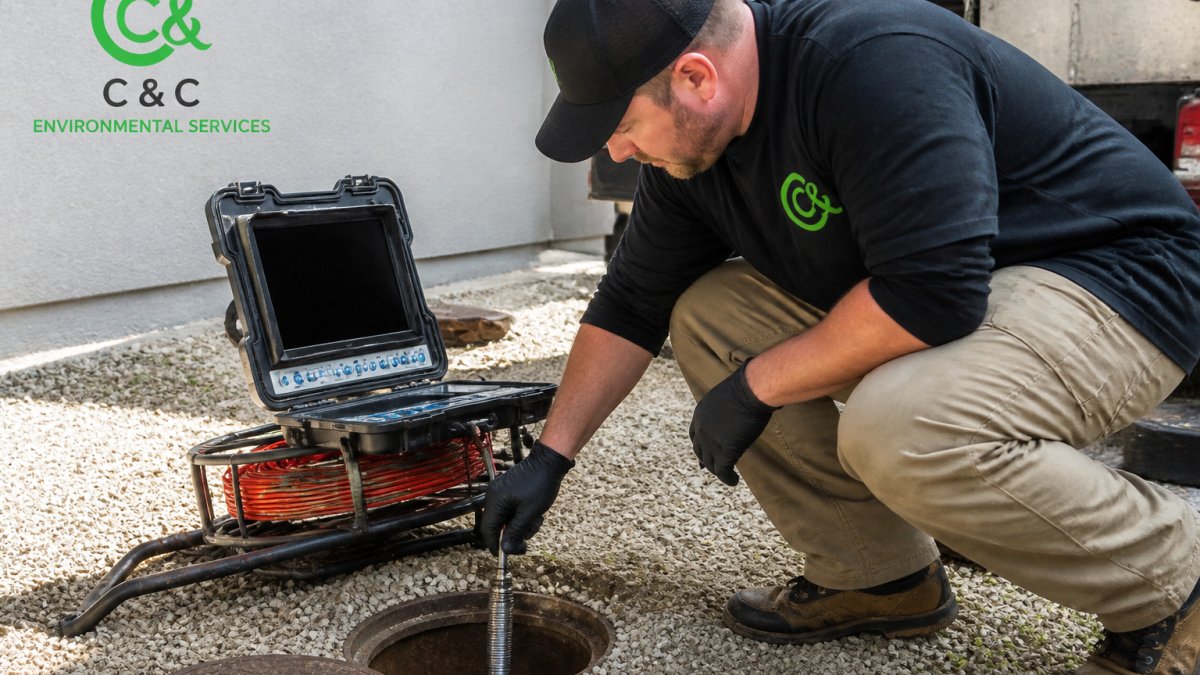
A CCTV (closed-circuit television) inspection uses a small, wheeled camera fed through the sewer line to record every inch, revealing cracks, joint separation, root intrusion, blockages, corrosion, and structural collapse.
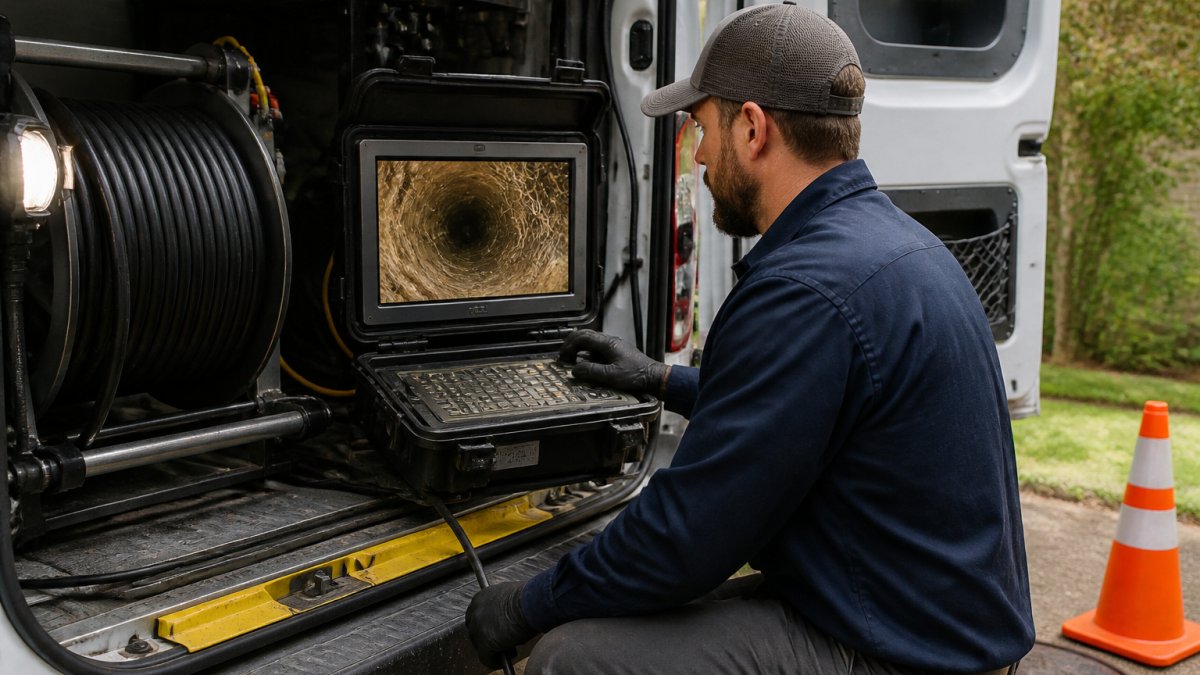
CCTV inspection process and PACP structural grading
A camera operator feeds the camera head into the line, typically from a cleanout or access point, and it transmits real-time video to a monitor above ground.
The PACP grading system turns this visual data into standardized scores: Grade 1 like new, Grade 2 minor issues, Grade 3 moderate damage, Grade 4 severe damage, and Grade 5 failure.
A quality repair should bring a Grade 4 or 5 pipe back to Grade 1 or 2.
Pre- and post-repair documentation requirements
Documentation is your proof the work was done to standard. Before repair, the inspection should include full-length CCTV footage, PACP grading of each defect, measurements of pipe diameter, slope, and alignment, cleanout locations, and surface photographs. After repair, you need full-length CCTV footage, post-repair PACP grading showing improvement, watertightness test results, site restoration photographs, and warranty documentation.
Sewer Line Repair vs. Replacement: Quality Implications
The choice between repair and replacement isn't just about cost, it's about whether the solution meets quality standards long term.
Trenchless lining works well for isolated cracks, minor root intrusion, or small sections of corrosion. Replacement is necessary when the pipe is structurally failed, severely corroded, or has multiple severe defects across a long section.
When trenchless rehabilitation preserves quality
Trenchless methods, primarily CIPP lining and pipe bursting, deliver quality results when applied correctly to the right damage profiles.
The limitation: CIPP can't fix severe structural failure.
Pipe bursting pulls a new pipe through the old one while breaking it apart, working well for completely failed pipes or severe corrosion.
When open-cut replacement is the only standard-compliant option
Open-cut replacement excavates the damaged section and installs new pipe. It's more invasive and costly, but sometimes the only way to meet quality standards.
Replace, don't repair, when:
- The pipe is collapsed or has large sections missing
- Multiple severe defects span more than 30% of the line
- The pipe material is so corroded it can't support lining
Open-cut replacement to modern standards means proper excavation with dust and noise control, new pipe meeting ASTM D3034 (for gravity sewer) or equivalent, rubber gasket joints with proper bedding, compacted backfill in lifts, post-installation watertightness and flow testing, and surface restoration.
Repair Methods and Their Quality Benchmarks
Different repair methods have different quality standards. Understanding them helps you evaluate whether a contractor's approach fits your pipe's condition.
Trenchless pipe lining: cured-in-place pipe standards
CIPP lining quality is governed by ASTM D8059 and ASTM D8060. The process requires pre-lining hydro jetting, proper resin saturation, correct curing temperature and duration, and post-cure inspection and testing. A quality CIPP repair includes CCTV verification that the liner is fully seated and defect-free.
Pipe bursting and open-cut replacement acceptance criteria
For pipe bursting, quality standards require new pipe meeting ASTM D3034 (PVC gravity sewer) or equivalent, proper pipe size and class, adequate depth and cover, post-installation watertightness testing (low-pressure air or hydrostatic), and proper leak-free connection to the existing system. Open-cut replacement adds proper trench width and depth, bedding material to specified depth, pipe support to prevent settlement, compacted backfill in 12-inch lifts, surface restoration, and environmental compliance for dust and noise.
Spot repair and localized work quality verification
Spot repair, fixing a single defect like a cracked section or broken joint, requires different standards than full-line rehabilitation.
For a cracked section repaired with epoxy or polyurethane injection, quality standards require cleaning the crack of all debris, proper injection pressure and flow rate, full penetration of the repair material, adequate curing time, and post-repair inspection to confirm the crack is sealed.
Building Codes, Standards, and Compliance
Your local building code and state environmental regulations set the minimum standards for sewer work. Meeting them is required for permit approval and legal protection.
ASTM and NASSCO standards for sewer infrastructure
ASTM International develops material and performance standards for pipe, joints, and installation. The most relevant for sewer work are ASTM D3034 (PVC Sewer Pipe and Fittings), ASTM D1784 (Rigid PVC and CPVC Compounds), ASTM D8059 (CIPP Installation), and ASTM D8060 (CIPP Specification). NASSCO's PACP standard provides the grading system for assessing existing pipe condition (PACP Condition Grading System).
Local building codes and permit requirements
Most jurisdictions require a permit for sewer line work, typically involving detailed plans showing the repair or replacement scope, proof of contractor licensing and liability insurance, and post-completion inspection by the local building official. If your contractor skips the permit process, they're avoiding this verification, a liability risk: if something goes wrong and the work wasn't permitted, your homeowner's insurance may not cover it.
Sewer Line Repair Warranty: What Quality Guarantees Should Cover
A warranty is your guarantee that the repair meets quality standards. What it covers, and what it doesn't, reveals how confident the contractor is in their work.
Workmanship warranty duration and scope
A quality workmanship warranty should cover labor defects (improper installation, missed steps, poor technique), leaks at joints or connections, failure of spot repairs, and restoration issues like settling or cracks in concrete. Duration matters: a 1-year warranty is minimal, 5 years is better, and 10 years signals confidence.
Material defect coverage and performance guarantees
Material warranties typically cover defects in the pipe, lining material, or fittings, and a quality material warranty from a reputable manufacturer often extends 25-50 years.
At C & C Environmental Services, we back our work 100% with the company. If a repair doesn't meet the standards we committed to, we return and fix it at no additional cost.
Creating Your Sewer Line Repair Checklist: Verification Steps
A quality repair requires verification at every stage. Use this checklist to track what should happen before, during, and after the work.
Pre-repair inspection and documentation
Before work begins:
- CCTV inspection completed and footage provided
- PACP grading documented for all defects
- Repair method recommended in writing with justification
This establishes a baseline: if something goes wrong later, you have proof of the original condition and what the contractor committed to fix.
During-work monitoring and quality checkpoints
While work is underway:
- Work schedule communicated in advance
- Site access and traffic control managed properly
- Dust and noise control measures in place
For trenchless lining, checkpoints are: pre-lining hydro jetting completed, lining material quality verified, curing process monitored (temperature, time), and post-cure inspection performed.
Post-repair testing and acceptance sign-off
After work is complete:
- CCTV inspection of repaired section completed
- Post-repair PACP grading documented
- Watertightness test (smoke or air test) performed and passed
This is where many repairs fall short: contractors complete the physical work but skip testing and documentation, leaving you without proof the repair meets standards.
| Verification Stage | Key Checkpoint | What It Proves |
|---|---|---|
| Pre-repair | CCTV + PACP grading | Baseline condition and repair justification |
| During work | Material and installation verification | Work is being done to specification |
| Post-repair | Watertightness test + PACP grading | Repair meets quality standards |
| Final | Building inspector sign-off | Permit compliance and code approval |
Contractor Qualification and Accountability
The contractor you choose determines whether your repair meets quality standards or just gets by.
Look for contractors who:
- Hold current licenses for plumbing, excavation, or utility work
- Carry liability insurance and workers' compensation
- Provide references from recent projects
At C & C Environmental Services, we've built our reputation on these standards over 20 years.
The contractor you choose should be able to answer these questions clearly:
- What's the pre- and post-repair PACP grade for my pipe?
- What watertightness test will you perform, and what are the pass/fail criteria?
- What does your warranty cover, and for how long?
If a contractor can't answer these, they're not working to quality standards.
A quality sewer line repair solves the problem for decades, not just temporarily.
Frequently Asked Questions
What is the 135 rule in plumbing?
The 1/4-inch-per-foot slope rule (often simplified to the '135 rule' in industry shorthand) means sewer lines must descend at least 1/4 inch for every 12 inches of horizontal run to maintain proper flow and prevent stagnation. This slope ensures gravity carries waste and water downhill consistently. Slope and alignment are critical quality benchmarks verified during post-repair inspection. Deviation from this standard indicates workmanship failure and may require remedial work.
What quality standards should a sewer line repair meet?
Quality sewer line repair must achieve structural integrity (no cracks, breaks, or deformation), watertightness (no infiltration or exfiltration), proper slope and alignment (1/4-inch-per-foot minimum), and flow capacity matching or exceeding original design. Repairs must comply with ASTM standards, local building codes, and NASSCO PACP grading protocols. Pre- and post-repair camera inspection documentation proves compliance. Written acceptance criteria and warranty coverage confirm accountability.
How can I tell whether a sewer line repair was done correctly?
Request a post-repair CCTV camera inspection with PACP structural grading documentation. Verify that the pipe shows no new cracks, joint separation, or debris. Check that slope and alignment meet the 1/4-inch-per-foot standard. Confirm the contractor provided before-and-after inspection reports, obtained required permits, and passed any municipal final inspections. Ask for written warranty terms covering workmanship and materials. A reputable contractor welcomes this scrutiny and provides comprehensive documentation.
Should a sewer line be repaired or replaced?
Repair (trenchless pipe lining or spot repair) is appropriate when structural damage is localized, pipe material remains sound, and slope/alignment are acceptable. Replacement is necessary when multiple sections show advanced deterioration, structural grade is poor, slope cannot be corrected, or pipe material has reached end-of-life. Post-inspection PACP grading and cost-benefit analysis determine the best option. A quality contractor provides transparent recommendations with supporting inspection data, not just the cheaper or easier choice.
What should a sewer repair warranty cover?
A quality warranty covers workmanship defects (typically 1-5 years) and material failures (matching manufacturer specifications). It should specify what triggers coverage (leaks, backups, structural failure), exclusions (root intrusion, ground settlement unrelated to the repair), and the contractor's remedy (repair, replacement, or refund). Reputable contractors back work 100% with company-issued warranties, not third-party insurance disclaimers. Review warranty terms before signing the contract and request them in writing.
How often should a sewer line be replaced?
Properly maintained sewer lines last 50-100 years depending on material (clay, cast iron, PVC). Regular inspection every 3-5 years detects early damage before failure. Replacement becomes necessary when structural grade is poor (PACP 4-5), multiple cracks or collapses are present, or slope cannot be corrected. Preventive maintenance and trenchless repair can extend service life. A quality contractor recommends replacement only when inspection data supports it, not as a default upsell.
What inspections should be completed after sewer line repair?
Post-repair inspection must include CCTV camera survey with PACP structural grading, flow testing to verify capacity, joint watertightness verification, and slope/alignment confirmation. Municipal final inspection and sign-off are required for permitted work. Documentation should include before-and-after video, structural grades, and written acceptance criteria. Results prove the repair meets quality standards and establish the baseline for future monitoring. Request these reports in writing before final payment.
Do I need a permit to repair my sewer line?
Most jurisdictions require permits for sewer line repairs involving excavation, replacement, or trenchless work. Permits ensure work meets local building codes, slope standards, and material requirements. Unpermitted work may void insurance coverage or create liability if problems arise. A quality contractor obtains permits upfront, provides transparent cost estimates including permit fees, and schedules municipal inspections. Verify permit status before hiring and request proof of final inspection sign-off upon completion.