 how-to
How to Verify Contractor Workmanship Before and After Work
Quick Summary
To verify contractor workmanship, go beyond the license check: set written quality standards before work starts, inspect at each phase against pass or fail criteria, and document everything with dated photos and test results. A valid license confirms only that a contractor may work, not that the job is done right.
- A valid license confirms legal permission to work, not the quality of the work on your site.
- Put specific materials, depths, backfill, testing, and cleanup requirements in the written scope before work begins.
- Inspect at three points: before work begins, during construction, and at final completion.
- Ask for inspections before trenches are backfilled, because bedding and joint faults are hard to reach afterward.
- Tie payment to completed milestones and hold retainage until a signed final walkthrough and test results are delivered.
Table of Contents
- Why License Checks Alone Don't Confirm Good Work
- Set Quality Standards Before the First Shovel Hits the Ground
- Contractor Workmanship Inspection Checklist for Each Phase
- How to Verify Contractor Workmanship Online and Through Independent Inspection
- Questions to Ask a Contractor Before Hiring Them
- How to Document Construction Defects and Handle Warranty Claims
- Schedule Your Workmanship Review With C & C Environmental Services
- Frequently Asked Questions
Last Updated: November 4, 2026
C & C Environmental Services has spent more than 20 years on North Carolina sewer, water and site work. Because an active license does not establish that a contractor is properly covered, verify contractor insurance alongside the workmanship checks that help protect your project.
Verifying workmanship is a process, not a single check. You set standards up front, inspect at each phase, document what you find, and know your options if something fails. Each step is simple. Together, they protect your property and your money.
Why License Checks Alone Don't Confirm Good Work
A license is a legal permission to work. It tells you the contractor passed a test or met minimum requirements at some point. It does not tell you how careful they are on your site today.
Here is what a license check can and cannot tell you:
- It can show: the business is registered, the license is active, and the trade classification fits the job.
- It cannot show: whether pipe is bedded correctly, whether joints are sealed, or whether the crew cleaned up after itself.
- It cannot show: how the company handles problems after the final invoice is paid.
Use license checks as the first filter, not the final answer.
Set Quality Standards Before the First Shovel Hits the Ground
You cannot judge workmanship against a standard you never wrote down. Before work begins, put your expectations in writing.
A good standards list is specific. Ask the contractor to confirm each item in the written scope of work.
- Materials: the exact pipe type, diameter, and grade you expect to see installed.
- Depth and slope: the trench depth and the grade of the line, stated in feet or inches.
- Backfill: what material goes back in, and how it gets compacted in layers.
Watch out: Vague language like "standard install" or "per code" gives you nothing to check against.
Ask the contractor to name the building codes and standards they follow.
Contractor Workmanship Inspection Checklist for Each Phase
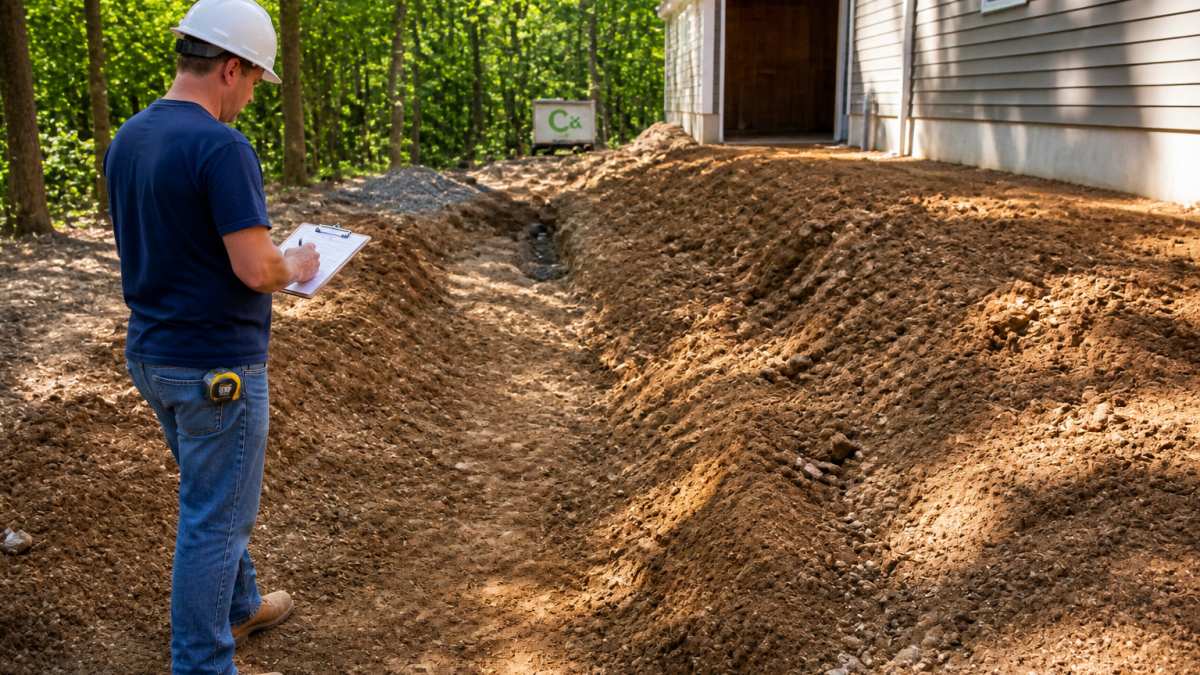
Inspect at three points: before work begins, during construction, and at final completion. Each phase catches different problems, and some problems can only be seen while the work is open. The checklist below uses pass/fail criteria so you can record a result instead of a vague impression.
Before Work Begins
Confirm the groundwork is solid before anyone digs.
- Utility locates have been requested and marked. Call 811 before digging. Pass: locate marks are visible and dated within the required ticket window. Fail: no marks or expired ticket.
- Permits are in place. Check what permits are needed in NC for your project. Pass: permit card or number on site. Fail: work starts without a permit.
- The written scope of work lists materials, depths, testing, and cleanup. Pass: product names, diameters, and measurements are stated. Fail: "standard install" or "per code" only.
During Construction
This is where most workmanship problems can be caught cheaply. Ask to be on site or to receive dated photos at key steps. For each item, record pass or fail and the date.
- Trench depth and slope match the plan when measured. Pass: measured depth and grade are within the tolerance stated in the scope. Fail: visible ponding, reverse slope, or depth short of plan.
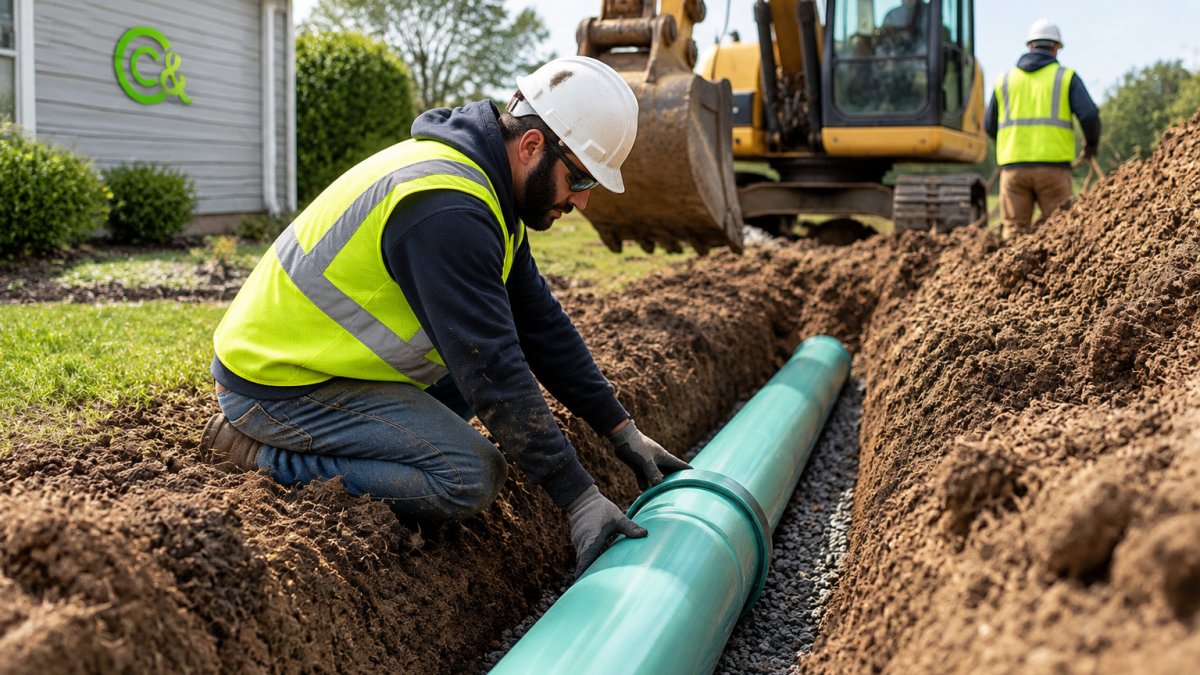
- Pipe is bedded on the specified material, not dumped directly on dirt. Pass: bedding material matches the spec and surrounds the pipe. Fail: pipe resting on rock or native soil.
- Joints are fully seated and connected per the manufacturer's instructions. Pass: joints are home and gaskets are not rolled. Fail: gaps, offset, or exposed gasket.
Watch out: Once a trench is backfilled, faults in bedding or joints are hard and expensive to reach. Ask for inspections before cover-up, not after.
At Final Completion
Final checks confirm the finished system works and the site is restored. Walk the job with the contractor and mark each item pass or fail in writing.
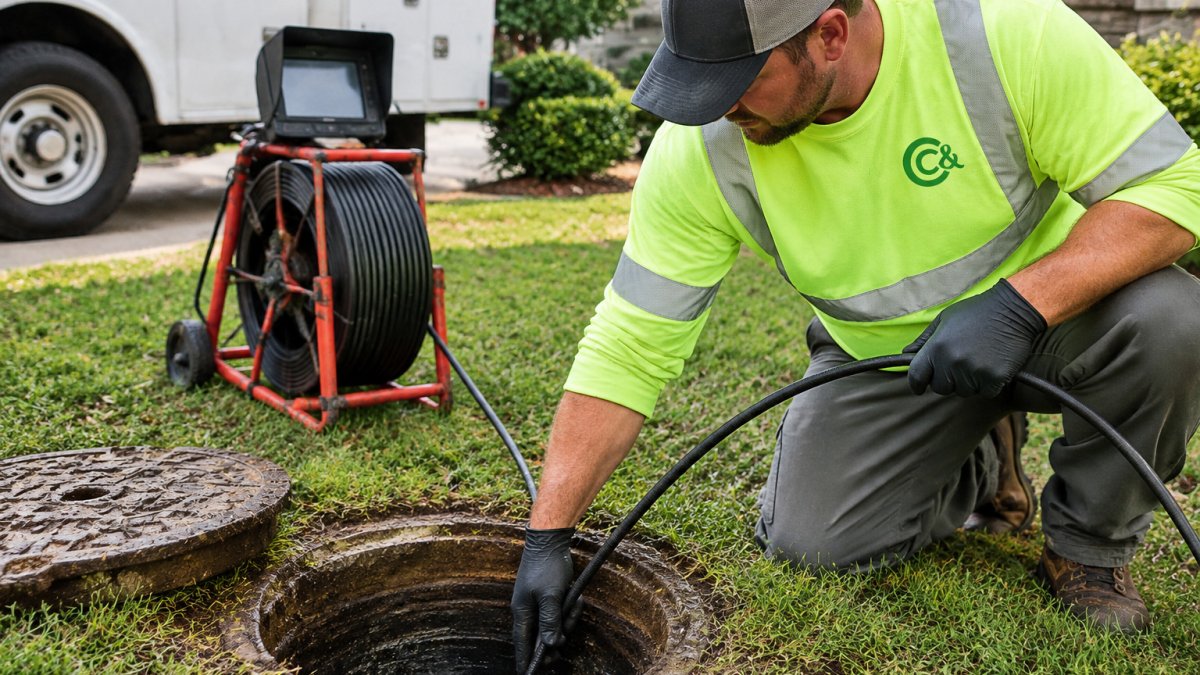
- A camera inspection or pressure test shows the line is clear and sealed. Pass: dated video or test report with results. Fail: verbal assurance only.
- Measurements match the scope of work. Pass: as-built dimensions match the approved plan. Fail: unapproved changes.
- Surfaces, sod, and paving are restored to the agreed condition. Pass: restoration matches the pre-work photos. Fail: ruts, missing sod, or damaged paving.
Ask for a visual record of the finished line, such as a camera inspection, before you sign off.
Trade-Specific Tolerances and Where to Find Them
Acceptable workmanship is not one standard. It varies by trade, by product, and by the code edition your local authority enforces. Before you inspect, ask the contractor to name the manufacturer instructions and the code sections that apply to your project, then confirm them with your local building department or state licensing board.
- Plumbing and sewer: manufacturer installation instructions for the pipe and fittings, plus the plumbing code edition adopted locally, govern bedding, slope, and testing.
- Electrical: the National Electrical Code (NFPA 70) and local amendments govern box fill, grounding, and clearances.
- Structural and concrete: the International Residential Code or International Building Code, as adopted locally, governs footings, reinforcement, and cure times.
A common pattern is that the manufacturer's written instructions are the most specific standard you can hand a contractor, because they state the exact fastener, spacing, and sequence the product requires.
Independent Inspection and Documentation
You do not have to rely only on the contractor's own quality control. An independent inspector with no stake in the job can review the work at key phases and give you a second opinion.
- Hire the inspector before work starts so the phases can be scheduled.
- Photograph each phase with a date stamp and a tape measure in frame where dimensions matter.
- Keep a dated punch list and update it at each walkthrough.
Fees vary by project and region, so get a written quote before you schedule.
The checklist below summarises what to verify at each phase, with the pass and fail criteria from the article.
| Phase | Check | Pass criteria |
|---|---|---|
| Before work | Utility locates | Marks visible and dated within ticket window |
| Before work | Permits | Permit card or number on site |
| Before work | Written scope | Product names, diameters and measurements stated |
| During construction | Trench depth and slope | Measured depth and grade within scope tolerance |
| During construction | Pipe bedding | Bedding material matches spec and surrounds pipe |
| During construction | Backfill | Lift thickness matches spec and compaction observed |
| Final completion | Camera or pressure test | Dated video or test report with results |
| Final completion | Restoration | Surfaces match pre-work photos |
How to Verify Contractor Workmanship Online and Through Independent Inspection
Beyond the contractor's own documentation, you can check the work yourself or bring in someone who has no stake in the job.
- Online checks: search the contractor's name and read reviews, but look for detail. Reviews that mention specific repairs, timelines, and how problems were handled are more useful than generic praise.
- Ask for references: request contacts for recent customers with similar projects, and call them. Ask whether the work held up over time.
- Independent inspection: hire a separate inspector to review the work at key phases. This costs extra, but it gives you a second opinion with no conflict of interest. Fees vary by project and region, so get a written quote.
Questions to Ask a Contractor Before Hiring Them
Asking the right questions up front reveals how a contractor thinks about quality. Good answers are specific. Vague answers are a warning sign.
- What testing will you do before you backfill?
- Who will be on my site, and will a supervisor check the work?
- What is covered by your warranty, and for how long?
Our FAQ answers common questions about how we handle our own work, so you can compare our answers with other contractors.
How to Document Construction Defects and Handle Warranty Claims
If something goes wrong, good documentation is your strongest tool. Start the record the moment you spot a problem, and tie each step to a date and a payment milestone so the contractor has a reason to respond.
- Photograph and date the issue from several angles, with a measuring tape in frame when possible. Include a wide shot that shows the room or site and a close shot that shows the defect.
- Write a short description of what you see, when you noticed it, and how it affects your property. Note the trade, the location, and the standard you believe was missed.
- Keep every communication in writing. Email is better than phone calls for this. If a call happens, follow up with an email summarizing what was said.
- Send written notice to the contractor describing the defect and asking for a fix by a set date. State the date, the remedy you expect, and that you are withholding further payment until the item is resolved.
- Review the warranty terms. Our workmanship guarantee terms explain what is covered and the limits that apply. Check the warranty length, what voids it, and whether it transfers if you sell the home.
Use Payment Milestones and Retainage as Leverage
Quality verification and payment should move together. A common pattern in construction contracts is to hold back a portion of each draw, often called retainage, until the work is accepted. Before you sign, confirm the contract states:
- The percentage held back and when it is released.
- That final payment is due only after a signed final walkthrough and delivery of test results and as-built documents.
- That the contractor will provide lien waivers from subcontractors and suppliers before final payment, so you are not exposed to a mechanics lien for work you already paid for.
Watch out: Paying the full contract price before the punch list is closed removes most of your leverage, and a defect that is reported quickly and documented well is usually easier to resolve than one that drags on for months.
Set a Repair Deadline and Escalate if It Slips
Give the contractor a reasonable written deadline to inspect and repair. If the deadline passes without a fix, escalate in this order:
- Send a second written notice that references the first and states a final deadline.
- File a complaint with your state licensing board or the local authority that issued the permit, and include your photos, notices, and test reports.
- Check whether the contractor's bond or liability insurance applies, and notify the insurer or bonding company in writing.
- If the amount in dispute justifies it, consult a construction attorney about your options under your state's contract and warranty rules.
Save all invoices, test results, permits, and photos. If a dispute reaches a lawyer or a licensing board, a clear paper trail makes your case.
Schedule Your Workmanship Review With C & C Environmental Services
Verifying workmanship is easier when you have a contractor who welcomes your checks. At C & C Environmental Services, we give upfront, honest estimates with no surprise pricing. We use state-of-the-art camera inspections and full diagnostics, and our work is backed 100% by the company.
Contact us today to schedule a workmanship review on your next sewer, water, or site project.
Frequently Asked Questions
How do I know if a contractor is legit?
Start by confirming the contractor holds an active license with the North Carolina Licensing Board for General Contractors or the relevant state board for the trade, and that the license classification matches the work being done. Search the business name and license number on the board's public lookup tool, then confirm the company carries current liability insurance and workers' compensation coverage. Ask for certificates of insurance directly from the insurer, not only from the contractor. Finally, request references from recent customers on similar projects and verify that those customers can be reached.
How can I verify a contractor's workmanship?
Inspect the work at each stage rather than only at the end. Before the contractor covers anything, check that trenches are at the specified depth, pipe slope matches the plans, joints are properly sealed, and bedding material meets the specification. After completion, test the system by running water, checking for leaks, and reviewing any camera inspection footage the contractor provides. Compare results against the scope of work and the applicable building code, and document any gaps before final payment.
How do I document poor contractor workmanship?
Take dated photos and short videos from several angles, including a tape measure or reference object in frame to show scale. Keep written notes of each observed defect, the date it was found, and any communication with the contractor about it. Save the original contract, change orders, and inspection reports in one folder. Send defect notices in writing by email or certified mail so there is a clear record of when the contractor was told and how they responded.
Should I hire an independent inspector to check a contractor's work?
For larger or underground work such as sewer lines, septic systems, and site grading, an independent inspection is often worth the cost because many defects are hidden once backfilled. Hire an inspector who is not affiliated with the contractor and ask for a written report with photos. Schedule inspections at key milestones, such as before backfill and at final completion, so problems can be corrected while they are still accessible.