 blog
Main Sewer Line Replacement Cost: 7 Factors That Decide It
Last Updated: October 26, 2026
Quick Summary
Main sewer line replacement cost depends on pipe length, depth, material, access, and method, not a flat rate. That is why two homes on the same street can get estimates that differ by thousands of dollars. Every honest estimate is built from the same seven cost factors, so compare scope line by line, not just the total.
- A short, shallow, accessible line is cheapest; a long, deep line under a driveway is most expensive.
- Trenchless sewer line replacement cost is usually higher upfront but often wins on total project cost.
- A camera inspection is a small fixed fee that determines everything downstream in the estimate.
- Snaking clears blockages, spot repair fixes one section, and replacement solves the whole line.
- A complete estimate names permits, utility locating, and compliance as line items.
Table of Contents
- What Drives Main Sewer Line Replacement Cost
- The 7 Cost Factors Behind Every Sewer Line Replacement Estimate
- Trenchless Sewer Line Replacement Cost vs. Traditional Digging
- Sewer Line Inspection Cost: The Step That Prevents Surprise Charges
- Cost to Snake a Main Sewer Line vs. Repair vs. Replace
- Permits, Utility Locating, and Code Compliance in Your Estimate
- How to Compare Sewer Line Replacement Quotes Line by Line
- Request an Upfront Sewer Line Estimate From C & C Environmental Services
- Frequently Asked Questions
What Drives Main Sewer Line Replacement Cost
Main sewer line replacement cost depends on pipe length, depth, material, access, and method, not a flat rate.
The main sewer line carries wastewater from your home to the public sewer or septic system. When it fails, you are not buying a part.
Below, we break down the seven factors that decide your final price, so you can read an estimate and know what is real.
Why Two Neighbors Get Different Quotes
Picture two houses side by side, same age, same square footage, same street. One gets a modest estimate; the other makes the owner gasp. The difference is almost never the contractor's mood. It comes down to what is underground:
- Pipe depth: A line four feet down is a different job than one eight feet down.
- Pipe material: Clay, cast iron, PVC, and Orangeburg all behave differently and cost differently to replace.
- Access: A line under a manicured lawn is easy. A line under a driveway, mature tree, or finished patio is not.
A common mistake is comparing two estimates as if they cover the same work. They rarely do. One may include restoration and permits; the other may not. Compare scope, not just the bottom line.
The 7 Cost Factors Behind Every Sewer Line Replacement Estimate
Every honest estimate is built from the same seven building blocks. Ask any contractor to show how each applies to your job, with a dollar figure attached.
- Pipe length, how many feet of line must be replaced
- Line depth, how far down the crew must dig
- Pipe material, what is being removed and what replaces it
- Access and excavation, what sits above the line
- Restoration, putting landscaping, driveways, and hardscape back
- Method, traditional trenching or trenchless
- Permits and compliance, local requirements and utility locating
The more of these that stack up, the higher the final price: a short, shallow, accessible line is cheapest; a long, deep line under a driveway is most expensive.
Where the Money Actually Goes: An Itemized Breakdown
**1.
2. Excavation and access. Usually the largest line item and the one that swings most.
**3.
4. Labor and equipment. Crew size, machine time, and duration drive this line.
5. Permits and utility locating. Permit fees vary by jurisdiction and are usually passed through at cost.
6. Backfill and compaction. Refilling the trench correctly, in lifts, with proper compaction, is real labor.
**7.
Pipe Length, Depth, and Material
Length is the most obvious driver. A short run costs less in pipe, labor, and time; a long run across a large yard multiplies all three.
Depth matters just as much. Deeper lines need more excavation, shoring, and safety measures.
Material changes the work in ways homeowners rarely expect. If you are unsure what is under your yard, know what kind of sewer pipes are under your yard before you compare numbers.
Access, Excavation, and Restoration
This is where estimates swing the most. The pipe itself is often the smaller line item. Getting to it is the expensive part.
Consider what sits above your line:
- Open lawn: easiest and cheapest to access
- Landscaping, shrubs, or a fence: removal and replacement add cost
- Concrete driveway or patio: demolition and repouring add significant cost
Restoration is the step most homeowners forget to ask about. A quote that replaces the pipe but leaves a trench and a torn-up yard is not the same as one that restores the surface. Ask directly: does this estimate include backfill and landscaping restoration?
Trenchless Sewer Line Replacement Cost vs. Traditional Digging
Trenchless sewer line replacement cost is usually higher upfront than traditional digging, but it often wins on total project cost because it avoids destroying yards and driveways.
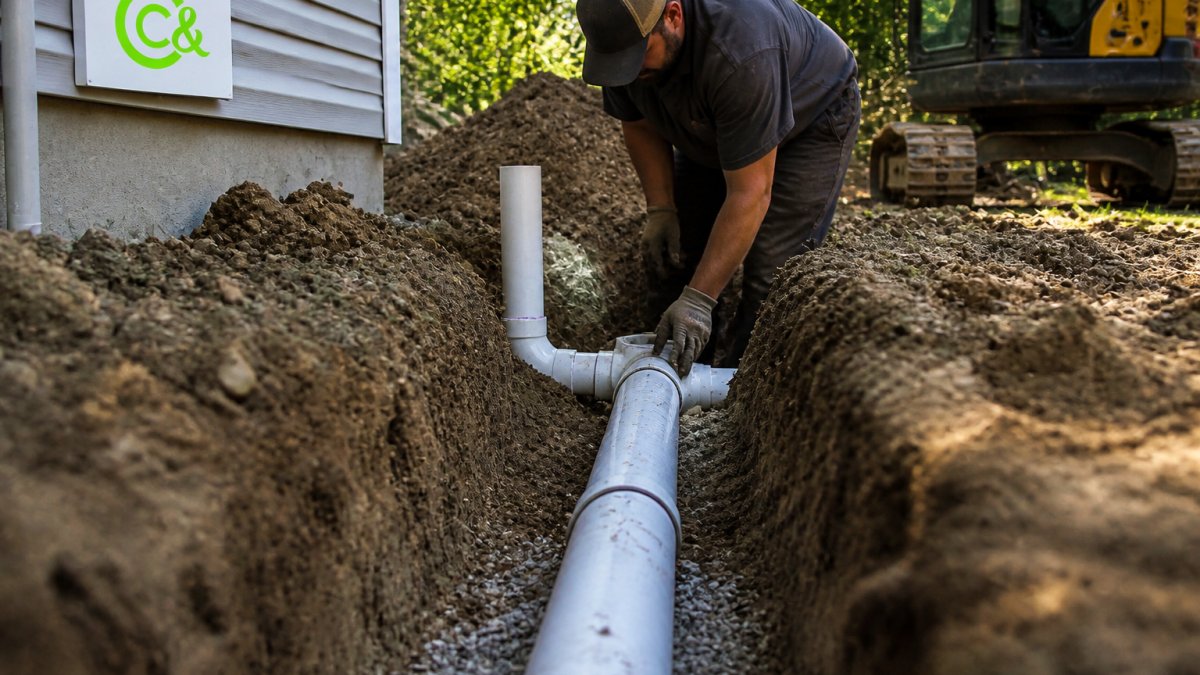
Traditional trenching means digging a continuous trench along the entire line. It is straightforward, works in almost any condition, and lets crews visually confirm the pipe.
Trenchless methods work through small access pits at each end. There are two main families, and they price differently:
Pipe lining (cured-in-place pipe). A resin-saturated liner is pulled or inverted into the existing pipe and cured in place, creating a new pipe inside the old one. It is generally the lower-cost trenchless option because it requires less excavation and no pipe bursting. The catch: lining needs a pipe that is still roughly round and structurally sound, and it slightly reduces the inside diameter.
Pipe bursting. A bursting head is pulled through the old pipe, breaking it outward while pulling a new pipe in behind it.
What Makes a Line Eligible for Trenchless
Eligibility is decided by the camera inspection, not by preference. A line is a good trenchless candidate when:
- The pipe is largely intact in shape and alignment, with no major sags or bellies
- The line has not collapsed or shifted out of grade
- Access pits can be placed at each end without major demolition
Traditional digging remains the better call when the line has collapsed, sagged, or shifted. In those cases, trenchless tools may not pass through, and full excavation is the honest answer. A contractor who promises trenchless before inspecting is guessing.
The Real Cost Trade-Off
The headline number for trenchless is often higher because equipment and specialty labor cost more per foot. Total project cost often flips once you add what trenching would have cost to restore: sod, landscaping, fence, and concrete repouring.
Ask each contractor to quote both methods where the line allows it, and to state clearly which restoration costs each method avoids. That side-by-side is the only fair comparison.
Sewer Line Inspection Cost: The Step That Prevents Surprise Charges
Sewer line inspection cost is small compared with the price of guessing wrong.
Skipping this step is how homeowners end up with surprise charges. A crew that digs first and diagnoses later may find a problem nobody priced.
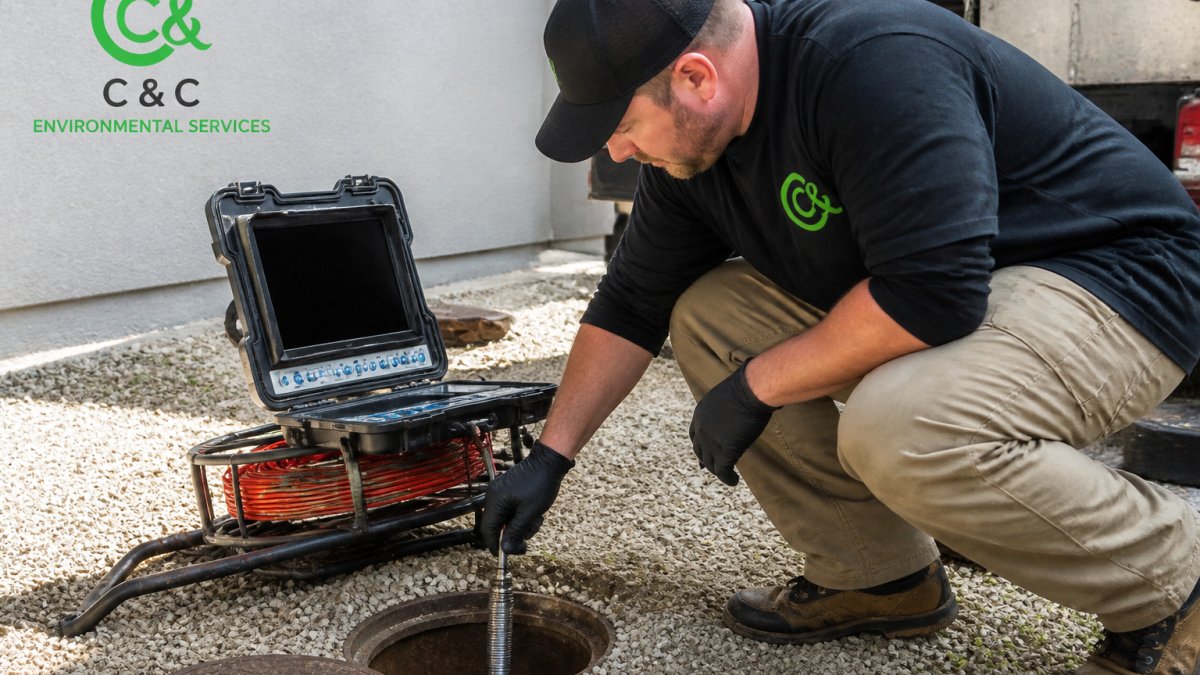
At C & C Environmental Services, we use state-of-the-art camera inspections and full diagnostics to locate the real problem before we quote.
If three contractors have been out and none found the actual cause, insist on a camera inspection and a written diagnosis. It is the difference between patching a symptom and fixing the line.
Cost to Snake a Main Sewer Line vs. Repair vs. Replace
The cost to snake a main sewer line is the lowest of the three options, but it only solves a blockage. It does not fix a broken pipe.
Here is how the three paths compare:
| Option | What It Fixes | Best For | Long-Term Outlook |
|---|---|---|---|
| Snaking | Blockages, minor clogs | Isolated clogs in a sound pipe | Temporary if the pipe is damaged |
| Spot repair | A single cracked or damaged section | Localized damage in an otherwise healthy line | Good when the rest of the line is sound |
| Full replacement | A failing or collapsed line | Widespread damage, root intrusion, old material | Long-term reliability |
Snaking clears the path. Spot repair addresses one bad section. Replacement solves the whole line.
The decision usually comes down to pipe condition. If a camera inspection shows one cracked spot in an otherwise solid pipe, a spot repair makes sense.
Be wary of anyone who recommends replacement before inspecting.
Permits, Utility Locating, and Code Compliance in Your Estimate
Permits, utility locating, and code compliance are not optional extras, they are part of a legitimate job and belong in your estimate.
Utility locating comes first, every time. Before any digging, crews call 811 so underground utilities are marked (811 Before You Dig). That is why we always call 811 before digging, and you can read more about why 811 utility locating matters.
Code compliance also shapes the job. If you want to understand what permits are needed in NC for this kind of work, that is worth reviewing before you sign anything.
A complete estimate names permits, locating, and compliance as line items. If they are missing, ask why.
How to Compare Sewer Line Replacement Quotes Line by Line
Comparing quotes means comparing scope, not just totals. A lower number that covers less work is not a better deal.
Use this checklist when you review each estimate:
- Does it include a camera inspection and written diagnosis?
- Is pipe length and depth stated clearly?
- Is the pipe material named for both removal and replacement?
Ask each contractor to explain any line item you do not understand. For a deeper walkthrough, see our guide on how to compare utility contractor quotes.
Watch out: A quote that will not put the warranty in writing is not a warranty. Get it on paper.
Request an Upfront Sewer Line Estimate From C & C Environmental Services
Every factor above comes back to one idea: an honest estimate is built on diagnosis, not guesswork. That is how we work at C & C Environmental Services.
We are family owned and operated, with over 20 years of experience serving residential, commercial, and municipal clients.
If you are ready to stop guessing and get a clear number, review our sewer contracting services and see how we handle your project.
Frequently Asked Questions
Can you replace part of a sewer line instead of the whole thing?
Yes. A spot repair replaces only the damaged section, usually between two cleanouts or fittings. It costs less upfront and disturbs less of your yard, but it only makes sense when the rest of the pipe is in good condition. If a camera inspection shows widespread cracking, root intrusion, or a collapsed section, a partial fix often leads to a second repair within a few years. Ask your contractor to show you the inspection footage so you can see why a spot repair or full sewer line replacement is the right call.
Does homeowners insurance cover sewer line replacement?
Standard homeowners policies usually exclude the sewer line itself because it sits outside the dwelling and is considered the homeowner's responsibility. Some insurers sell a sewer or water backup endorsement that covers damage inside the home caused by a backup, and separate service line coverage can be added in many states. Read your policy's exclusions before you assume anything is covered, and ask your contractor to document the cause, since sudden damage and long-term deterioration are often treated differently.
Is trenchless sewer line replacement cheaper than traditional replacement?
Not always. Trenchless methods like pipe lining and pipe bursting can cost more per foot than open-cut digging, but they often save money overall by avoiding driveway removal, patio demolition, and full landscaping restoration. The catch is eligibility: trenchless work needs a pipe that is still structurally sound enough to line or burst, with few severe bellies or collapses. A camera inspection is the only reliable way to know which method your line qualifies for, so get that first.
What additional costs come with sewer line replacement beyond the pipe itself?
The pipe is only part of the bill. Expect line items for permits, utility locating, excavation and shoring, hauling away old pipe and soil, backfill and compaction, and restoration of driveways, sidewalks, or landscaping. Emergency or after-hours work, deeper lines, and long runs under mature trees add more. A written, itemized estimate should list each of these separately so you can compare quotes fairly and see exactly what happens if the crew hits rock or an unmarked utility.
Sewer line work is stressful enough without wondering whether the final bill will match the estimate. C & C Environmental Services gives you a camera-based diagnosis, an upfront written estimate, and workmanship backed 100% by our company. Our team handles full diagnostics, E/One certified pump work, and honest pricing with no surprise charges. Get started with C & C Environmental Services and replace your sewer line with a number you can trust.