 blog
Carolina Civil Works vs Wynn Site Development: Which Fits Your Project
Last Updated: November 19, 2026
Quick Summary
Choosing between carolina civil works vs wynn site development depends on your project's scale, scope, and schedule. Compare each firm's self-performed underground work, crew capacity for your acreage and utility footage, and itemized bids that list the same scope items. Verify current details directly with each company before deciding.
- Match each firm's capabilities to your project's disturbed acreage, utility linear footage, and duration.
- Ask each contractor whether it self-performs underground work or subcontracts it, and how that affects schedule.
- Require itemized bids listing clearing, grading, trenching, utilities, storm drainage, and erosion control.
- Read reviews for specifics on change orders, proactive communication, and punch-list closeout.
Table of Contents
- Carolina Civil Works vs Wynn Site Development at a Glance
- Core Services and Scope of Work Compared
- Project Scale Suitability: Which Firm Fits Your Job
- Wynn Site Development Reviews and Client Feedback
- How to Compare Sitework Contractor Bids Fairly
- Reviewing Site Development Contractor Project Photos and Track Record
- Questions to Ask a Sitework Contractor Before You Sign
- Frequently Asked Questions
Carolina Civil Works vs Wynn Site Development at a Glance
Choosing between Carolina Civil Works and Wynn Site Development is a real decision with money and schedule on the line. Project managers comparing site development contractors need a clear view of what each firm offers before they request bids. This comparison is meant to help you weigh your options.
Site development covers the work that comes before a building goes up: clearing, grading, excavation, and the underground utilities that serve the site. The right contractor depends on scope, schedule, and how much of the utility work you need handled in-house.
Many project managers find that the first step is simply matching each firm's core capabilities to the job at hand. A small residential lot calls for different equipment and crews than a multi-acre commercial development. Keep that scale question in mind as you read.
Use this guide as a starting point, then verify current details directly with each company before making a decision.
Core Services and Scope of Work Compared
Scope of work is where many bids diverge. One contractor may include grading and erosion control in a base price, while another treats those as add-ons. Before comparing numbers, list the tasks your project actually requires: clearing, rough and fine grading, trenching, underground utility installation, and storm drainage.
A useful check is to ask each firm to break its bid into line items. That shows you whether utility connections, pump stations, or stormwater work are included or excluded.
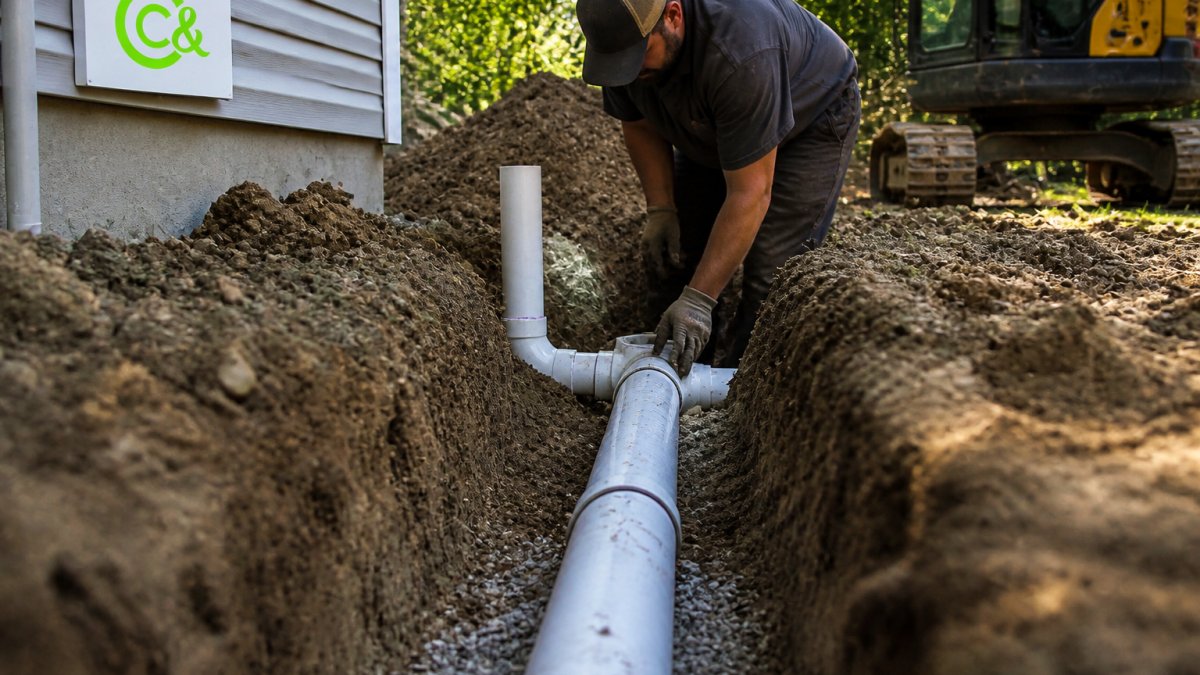
Pay attention to whether the contractor self-performs the underground work or subcontracts it. You can review the full site development service offering to see which tasks each firm is equipped to book. Ask each contractor whether it self-performs the underground work or subcontracts it, and how that affects schedule control.
The article lists the scope items to check across bids, so a quick reference is useful.
| Scope item | What to confirm | Why it matters |
|---|---|---|
| Clearing | Listed as a line item | Scope gaps appear in bids |
| Rough and fine grading | Listed as a line item | Defines the earthwork included |
| Trenching | Listed as a line item | Affects utility installation cost |
| Underground utilities | Self-performed or subcontracted | Controls schedule |
| Storm drainage | Listed as a line item | Often treated as an add-on |
| Erosion control | Included or add-on | Can change the base price |
Project Scale Suitability: Which Firm Fits Your Job
Not every contractor is built for every job, and the scale question is where these two firms most often diverge in practice. A firm that excels on a single-family lot may not have the crews or equipment for a large subdivision. Conversely, a large commercial contractor may not prioritize a small residential sewer repair. The useful move is to translate your project into the numbers a sitework estimator actually bids against, then test each firm against them.
Start by defining your project's scale in four measures: disturbed acreage, linear feet of water and sewer main, linear feet of storm pipe, and expected duration in working days. If you're unsure what each phase involves, what to expect with your site prep covers the work from trenching through grading. Add the number of service connections and any pump station or treatment plant work. Those five numbers will separate a residential subdivision job from a commercial pad job faster than any brochure.
Firms tend to differ in orientation: some are geared toward residential subdivision work, with repetitive lot grading and long water and sewer runs, while others are geared toward commercial infrastructure, with mass grading, storm drainage structures, and pump stations. Neither orientation is better; they differ in equipment and crew structure.
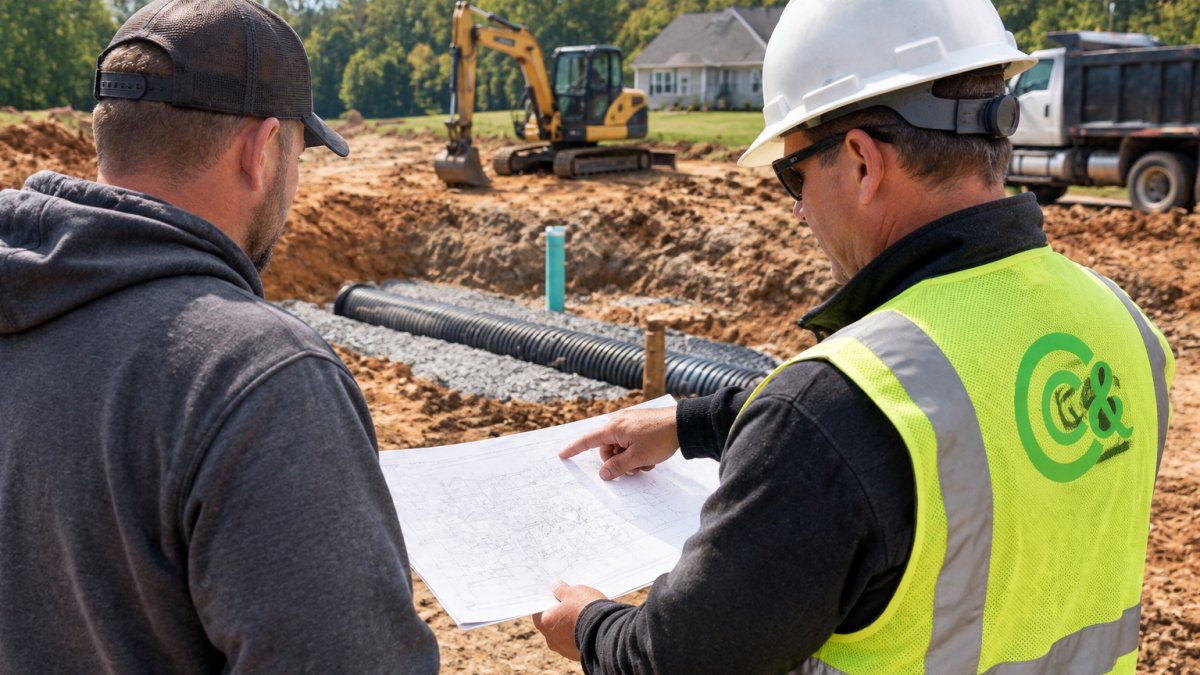
Use that split to frame your request. For a subdivision, ask each contractor how many lots they can grade and connect in a week and how they sequence water, sewer, and storm so the paving crew is never waiting. For a commercial or institutional site, ask about mass excavation volumes, dewatering experience, and whether they self-perform structural concrete for drainage structures and pump stations.
Watch out: a contractor who bids a large commercial job with a residential crew model may look competitive on price and then struggle with schedule when unexpected conditions such as rock or dewatering arise. Ask directly how many projects of your acreage and utility linear footage they completed in the last 24 months, and ask for the names of the foremen who ran them.
Be honest about your timeline. Tight schedules reward contractors with reliable equipment availability and experienced foremen who can mobilize quickly when underground conditions change. A firm sized for your job should be able to tell you its crew count and equipment list readily.
Wynn Site Development Reviews and Client Feedback
Reviews can reveal patterns that a polished website will not. Treat the framework below as a way to organize what you find rather than a verdict.
When reading feedback on Wynn Site Development, look for comments about communication, schedule adherence, and how the crew handled unexpected site conditions. Reviews that mention specifics, such as a named phase of work or a particular challenge, tend to be more informative than general praise. The same filter applies to Carolina Civil Works: sort for reviews that name grading, utility installation, storm drainage, or pump station work, because those map to the scopes you are actually bidding.
A practical method is to build a simple review matrix. Down the side, list the phases you care about, clearing, rough grading, fine grading, water and sewer main, storm drainage, erosion control, restoration, and closeout. Across the top, put each firm. Then tally how many reviews mention each phase and whether the mention is positive, neutral, or a complaint. A firm with twenty reviews that never mention utility work tells you something about its mix; a firm with five reviews that all describe a subdivision build tells you something else.
Compare these reviews with the feedback you find for Carolina Civil Works, and note recurring themes rather than single standout comments. Look specifically for patterns in three areas: how change orders were handled, whether the contractor communicated proactively when underground conditions changed, and how punch-list and warranty items were closed out. Those three areas are where sitework disputes usually start, and they are rarely visible in a star rating.
Watch out: review platforms weight recency and volume unevenly, and a small number of reviews can swing an average. Do not treat a five-star average from a handful of reviews as equivalent to a larger, more mixed sample. Read the dates and the project descriptions, not just the score.
Keep in mind that reviews are one input among several. Ask each firm for references from clients with projects similar to yours, and call those references directly. A short reference call that asks 'what went wrong and how did they handle it' will tell you more than any review page. If you want a structured side-by-side look at how these two firms differ, our Wynn vs. Carolina Civil Works site development contractor comparison walks through the key distinctions.
How to Compare Sitework Contractor Bids Fairly
Bids are only comparable when they describe the same work. Build a simple comparison sheet with the same scope items listed for every bidder. Then flag any bid that is significantly lower or higher than the rest, and ask why.

Look for exclusions buried in the fine print, such as unit pricing for rock removal, dewatering, or unforeseen utility conflicts. A low bid with broad exclusions can cost more by the end of the job. Ask each contractor to state their assumptions about soil conditions, access, and working hours.
Request that each firm provide a written schedule along with the price. A realistic schedule shows you how the contractor plans to sequence grading, utilities, and drainage.
Reviewing Site Development Contractor Project Photos and Track Record
Project photos can show the quality of finished grading, trench backfill, and surface restoration. Ask for photos of completed work at similar scale, and look for clean slopes, proper compaction marks, and tidy site management. Photos taken during construction can also show how the crew manages equipment and erosion control.
Track record goes beyond photos. Ask how long each company has been operating, whether its crews are employees or subcontractors, and how it handles warranty issues after handover. Verify licenses and insurance through the appropriate North Carolina agencies before signing anything.
Questions to Ask a Sitework Contractor Before You Sign
Before you sign, ask each contractor a few direct questions. Ask who will be on site day to day and who your point of contact will be. Ask how they handle unexpected underground conditions and how quickly they can mobilize to address them. Ask for their process on change orders so you understand how added costs are approved.
Also confirm which permits the contractor will obtain and which ones fall to you as the owner. Our overview of what permits are needed in NC can help you frame that conversation. Finally, ask how the contractor will communicate progress and handle the final walkthrough.
A good contractor welcomes these questions. Contact us today to discuss your site development or utility project and request a detailed, itemized estimate.
Frequently Asked Questions
What services does Carolina Civil Works provide?
Carolina Civil Works is a sitework and civil construction firm. Its public listings describe excavation, grading, and site preparation for commercial and residential developments. Because service details can change, confirm the current scope directly with the company before assuming it covers your project type, such as underground utilities, storm drainage, or water and sewer work.
What services does Wynn Site Development provide?
Wynn Site Development offers site development work that typically includes clearing, grading, and earthwork for commercial and residential projects. Compare its listed services against your scope, especially if you need underground utility installation or storm drainage. Ask for a written scope of work that lists every phase so you can match it against your plans.
How do I compare sitework contractor bids fairly?
Put every bid on the same scope sheet. Check whether each one includes clearing, grading, erosion control, utility work, permits, and cleanup. Look at exclusions and unit prices, not just the total. A lower bid that leaves out erosion control or utility tie-ins often costs more once change orders begin. Ask each contractor to explain its assumptions in writing.
What should I check before hiring a site development contractor?
Verify the company's licensing and insurance, ask for references from projects of similar size, and request recent project photos. Confirm who will supervise the job and how schedule changes are handled. Ask how the company manages stormwater and erosion control under North Carolina requirements, and confirm that the estimate includes a clear process for handling unforeseen site conditions.